
4 products
-
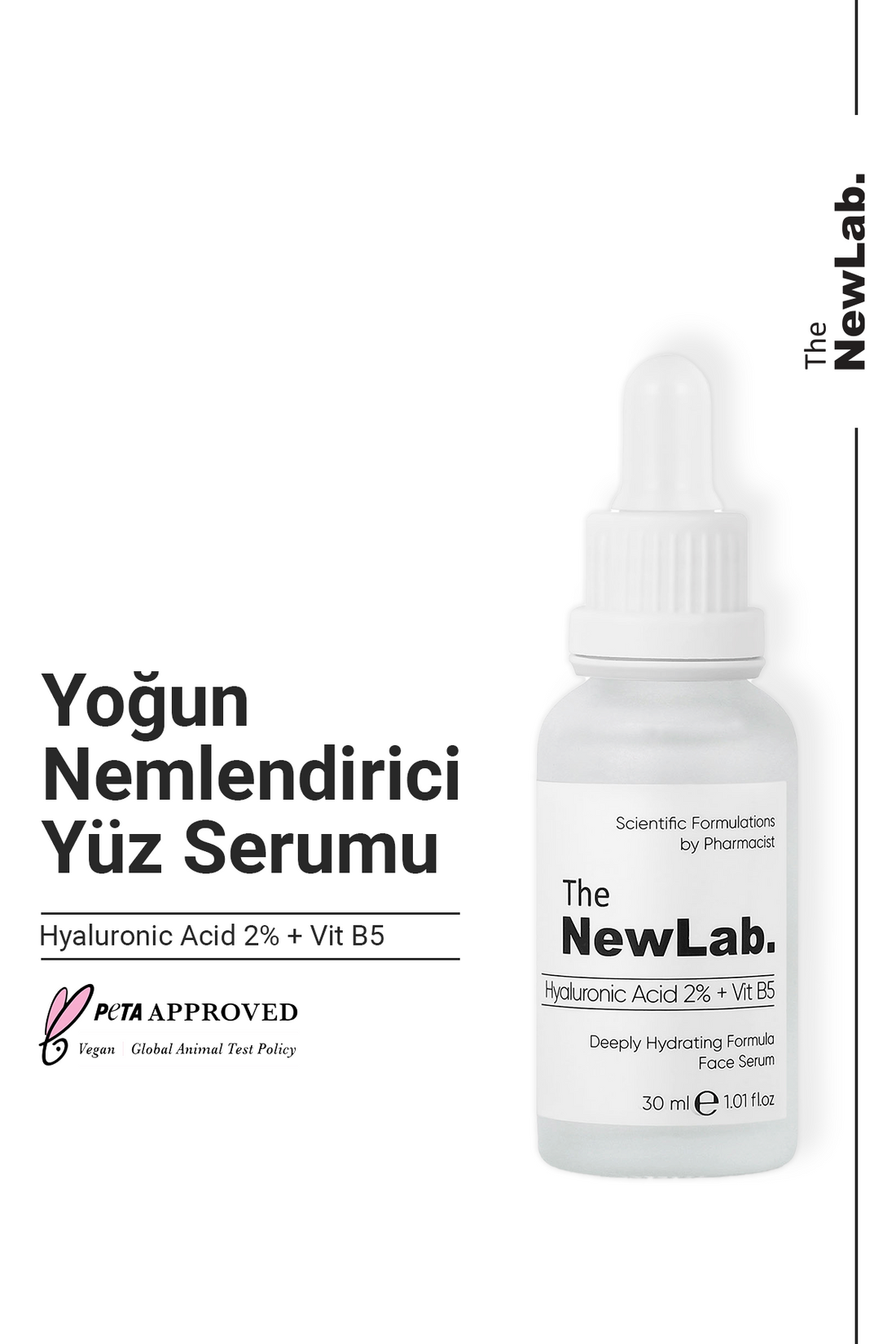
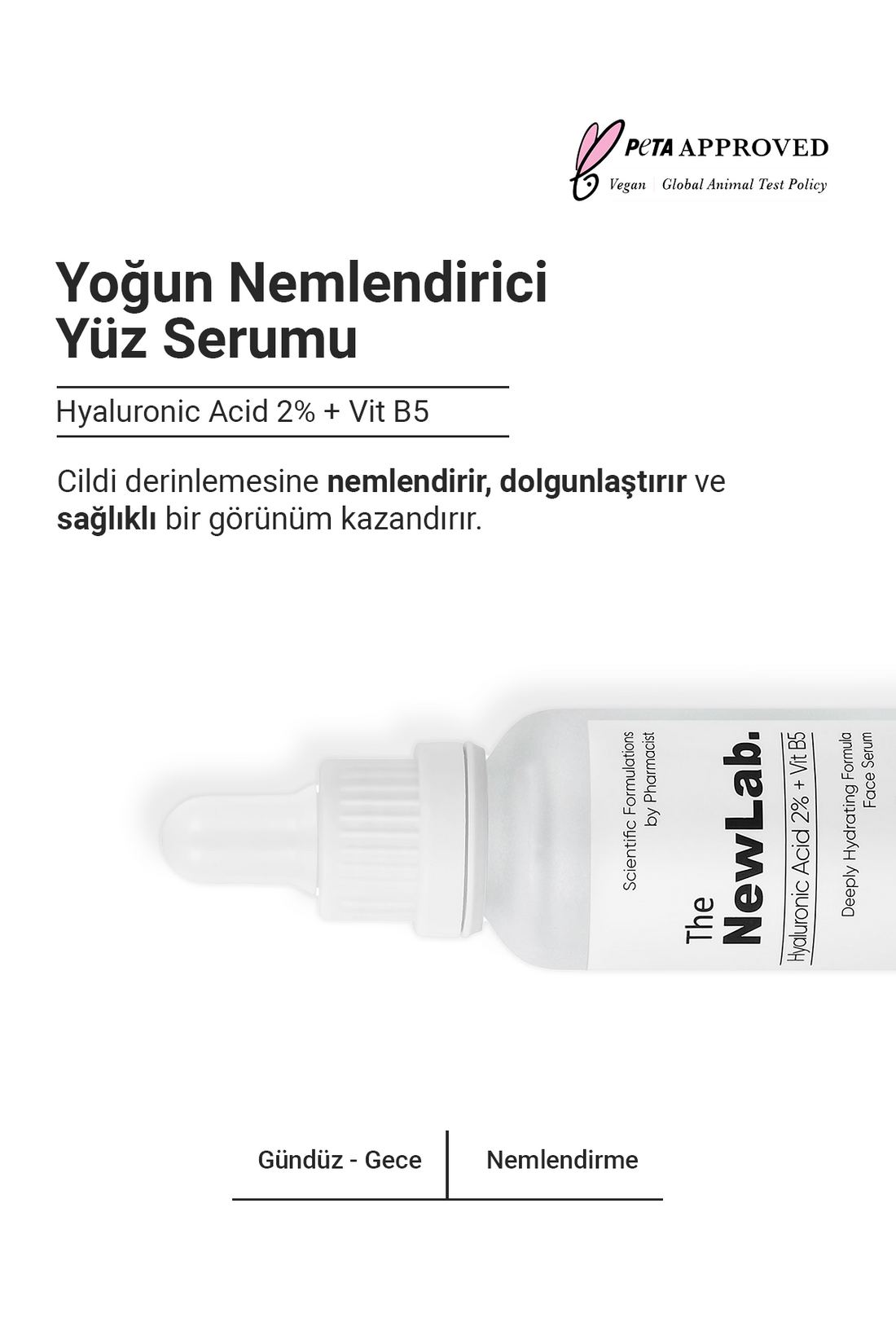 Intensive Hydrating Hyaluronic Acid Serum 2% + Vit B5 30 mlVendor:Intensive Hydrating Hyaluronic Acid Serum 2% + Vit B5 30 mlThe NewLab.
- Regular price
-
454.94TL - Regular price
-
699.90TL - Sale price
-
454.94TL
Quick view
-
 SPF50 Sun Drops SerumVendor:SPF50 Sun Drops SerumThe NewLab.
- Regular price
-
545.94TL - Regular price
-
839.90TL - Sale price
-
545.94TL
YENİQuick view
-
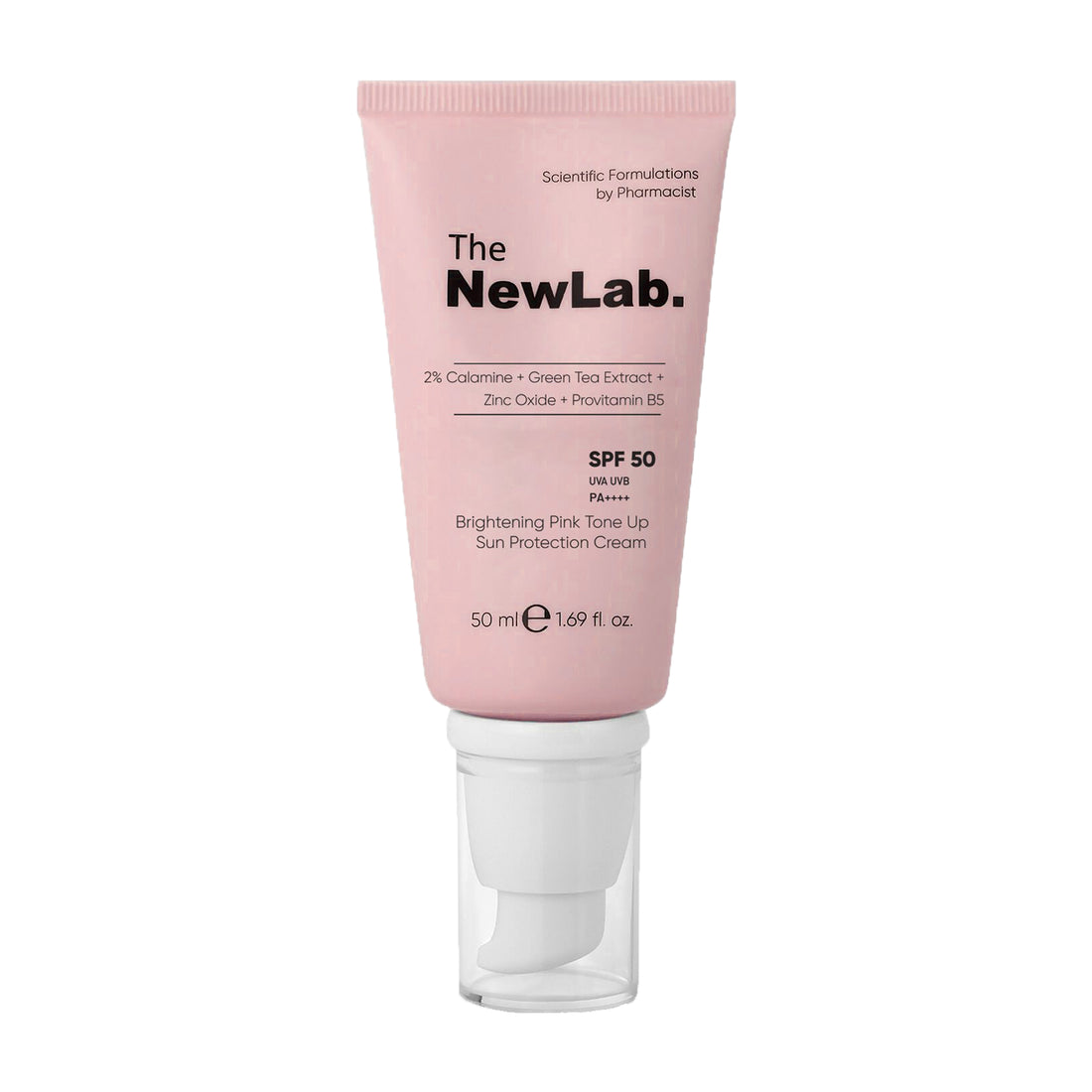
 Brightening and Skin Tone Evening Sunscreen SPF 50+ 50 mlVendor:Brightening and Skin Tone Evening Sunscreen SPF 50+ 50 mlThe NewLab.
- Regular price
-
630.44TL - Regular price
-
969.90TL - Sale price
-
630.44TL
Quick view
-

 Brightening and Skin Tone Evening Sunscreen SPF 50+ 50 mlVendor:Brightening and Skin Tone Evening Sunscreen SPF 50+ 50 mlThe NewLab.
- Regular price
-
199.99TL - Regular price
-
199.99TL - Sale price
-
199.99TL
Quick view


What is Vitamin B5 (Panthenol) and Why is it Used in Skincare?
Vitamin B5, known scientifically as pantothenic acid, is an essential B-group vitamin for energy metabolism, cell regeneration, and tissue repair in the body. Its name comes from the Greek word "pantothen" (everywhere) — because it is naturally found in almost all living organisms. In skincare products, the provitamin form of B5, Panthenol (D-Panthenol), is used. When applied to the skin, Panthenol is rapidly absorbed and converted by skin cells into active Vitamin B5 (pantothenic acid).
This conversion is the most important feature that distinguishes panthenol from other moisturizing actives: panthenol does not just remain on the surface; after penetrating the skin, it turns into an active vitamin and works at the cellular level. By participating in Coenzyme A (CoA) synthesis, it supports cell metabolism, increases lipid production, strengthens the skin barrier, and accelerates the wound healing process. In short, panthenol is moisturizing, soothing, and repairing all at once — three distinct benefits from a single active ingredient.
You may see it listed as "Panthenol," "D-Panthenol," "Dexpanthenol," or "Provitamin B5" in ingredient lists (INCI) — they all refer to the same active substance. When applied to the skin, it is converted by the body into Pantothenic Acid (active Vitamin B5). This conversion is why panthenol is able to work in the deeper layers of the skin.
The NewLab Skincare Products Containing Vitamin B5 (Panthenol)
Intensive Moisturizing Hyaluronic Acid Serum 2% + Vit B5
The NewLab's most intensive moisturizing serum combines 5 different forms of Hyaluronic Acid with Panthenol (Vitamin B5) in a single formula. The mechanism of these two actives working together is quite powerful: Hyaluronic acid, as a humectant, draws water from the environment and the lower layers of the skin, while Panthenol provides additional hydration and supports the skin's own lipid production, preventing this moisture from evaporating. The result: multi-layered, long-lasting hydration and a strengthened skin barrier.
Allantoin in the formula soothes the skin and supports cell regeneration, while Lactic Acid enhances the absorption of active ingredients through its mild exfoliating effect.
Active Ingredients: 5-Form Hyaluronic Acid Complex 2%, Panthenol (Vitamin B5), Allantoin, Lactic Acid
First application: Panthenol is quickly absorbed, providing an immediate feeling of softness, relief, and hydration. Tension and mild irritation due to dryness decrease within minutes.
1-2 weeks: The skin's moisture balance stabilizes, and barrier function begins to strengthen. The skin feels more resilient and healthy.
4-6 weeks: With increased lipid production, the skin barrier is significantly strengthened. Fine lines caused by dryness diminish, skin texture smooths, and it gains a natural radiance.
Long-term: With regular use, the skin increases its own moisture-retention capacity and becomes more resistant to external factors.
How Does Vitamin B5 (Panthenol) Work on the Skin?
The mechanism of action of panthenol in skincare takes place in 4 stages:
1. Rapid Absorption and Conversion: Thanks to its small molecular size and amphiphilic (compatible with both water and oil) structure, panthenol easily crosses the skin's stratum corneum. Once taken up by skin cells, it is enzymatically converted into pantothenic acid (active Vitamin B5).
2. Coenzyme A Synthesis: Pantothenic acid participates in the synthesis of Coenzyme A (CoA) in cells. CoA is one of the most critical metabolic coenzymes in the body — it is essential for fatty acid synthesis, energy production, and cell regeneration. When CoA levels increase in the skin, lipid production accelerates, cell regeneration is supported, and energy metabolism is strengthened.
3. Lipid Production and Barrier Strengthening: Increased CoA levels support the synthesis of fatty acids that make up the skin's lipid matrix. These lipids are the building blocks of the skin barrier — by maintaining the integrity of the barrier, they reduce transepidermal water loss (TEWL). A stronger barrier = less moisture loss = more hydrated, healthy skin.
4. Fibroblast Activation and Wound Healing: Panthenol stimulates fibroblast proliferation in the dermis. Fibroblasts are cells that produce collagen and elastin. This activation accelerates the wound healing process, supports tissue repair, and strengthens the structural integrity of the skin.
Benefits of Vitamin B5 for the Skin
Deep and Sustainable Hydration: As a humectant, panthenol draws and holds water in the upper layers of the skin. At the same time, it prevents this moisture from evaporating by supporting lipid production. This dual humectant + emollient effect provides more lasting hydration than actives that only draw water.
Skin Barrier Repair and Strengthening: By supporting CoA synthesis, it strengthens the skin's lipid matrix. It contributes to the restoration of barrier function in skin that is damaged, weakened, or has a thin barrier. It accelerates the recovery of the barrier, especially after excessive exfoliation, harsh cleansers, or environmental stress.
Anti-Inflammatory (Soothing) Effect: Panthenol has powerful anti-inflammatory properties. It soothes the skin and reduces redness in cases of UV-induced skin damage, sunburn, wind irritation, and irritation caused by cosmetic products. This soothing effect is especially valuable for sensitive and reactive skin types.
Wound Healing and Tissue Repair: It accelerates the wound healing process by stimulating fibroblast proliferation. It shortens the recovery time for minor cuts, damage after peeling/laser treatments, sunburns, and cracks. For this reason, it is also widely used in diaper rash creams and medical repair products.
Elasticity and Anti-Aging Support: Fibroblast activation supports collagen and elastin production. With long-term use, skin elasticity increases, and the appearance of fine lines decreases. When used together with HA, a dual plumping + elasticity effect is achieved.
Vitamin B5 vs. Niacinamide (B3): What is the Difference?
Both are B-group vitamins and strengthen the skin barrier, but they work through different mechanisms:
Vitamin B5 (Panthenol): Supports lipid production via CoA synthesis. It is focused on hydration and soothing. It has a strong anti-inflammatory effect. It stands out for sensitive, dry, and barrier-damaged skin. Its direct effect on sebum production is limited.
Niacinamide (B3): Supports ceramide synthesis. It has sebum-regulating, pore-minimizing, and brightening effects. It stands out for oily, acne-prone, and hyperpigmented skin. Its barrier-strengthening mechanism is through ceramide production.
Combined use: They are a perfect duo and can be safely used together. B5 strengthens the barrier through lipids, and B3 through ceramides — providing dual barrier support from two different mechanisms. The NewLab's HA + B5 Serum and Niacinamide Serum can be easily combined in the same routine.
Vitamin B5: Best Combinations with Other Actives
B5 + Hyaluronic Acid: The golden duo of hydration. HA draws water, and B5 provides both additional hydration and locks it in by increasing lipid production. The NewLab combines this duo in a single formula: HA 2% + Vit B5 Serum.
B5 + Retinol: Retinol can dry, sensitize, and temporarily weaken the skin barrier. B5 is an ideal partner to balance all these side effects of retinol — providing hydration, soothing, and barrier repair. An HA + B5 serum after evening retinol is a "rescue" step.
B5 + Vitamin C: While Vitamin C provides antioxidant protection and brightening, it can cause mild irritation in sensitive skin due to its low pH. B5 soothes the potential irritation of Vitamin C and increases the skin's tolerance. Morning: Vitamin C serum → HA + B5 serum → sunscreen.
B5 + AHA / BHA: Excellent for recovering the barrier after exfoliation. A B5 + HA serum after AHA/BHA application soothes sensitized skin, restores moisture, and accelerates barrier repair.
B5 + Centella Asiatica (Cica): Both are soothing and repairing. Used together, they form a powerful restorative duo for sensitive, red, or barrier-damaged skin. The sequence HA + B5 Serum → Cica Cream is ideal.
B5 + Squalane: While B5 draws moisture as a humectant, squalane locks it in as an emollient/occlusive. Hydration from different mechanisms — comprehensive hydration and barrier support when used together.
Is Vitamin B5 Suitable for All Skin Types?
Dry and Dehydrated Skin: This is where B5 is strongest. It meets the fundamental needs of dry skin with its trio of hydration + support for lipid production + barrier strengthening. Maximum effect when used with HA.
Sensitive and Reactive Skin: The anti-inflammatory effect of B5 soothes redness and irritation in sensitive skin. Recognized by the FDA as "generally safe and effective," panthenol is one of the actives with an extremely low risk of allergic reaction, even in sensitive skin.
Oily and Acne-Prone Skin: Panthenol is non-comedogenic and does not clog pores. Its lightweight structure does not feel heavy on oily skin. It is an ideal supporting active to protect the barrier and reduce irritation when used alongside drying actives (retinol, BHA, benzoyl peroxide) in acne treatment processes.
Mature Skin: Supports collagen production via fibroblast activation and CoA synthesis. Hydration + plumping with HA, and anti-aging + tolerance enhancement with retinol are achieved.
Barrier-Damaged Skin: In the restoration of a skin barrier weakened by excessive exfoliation, incorrect product use, climate change, or stress, B5 accelerates recovery through lipid production and soothing.
Things to Consider
Safety profile: Panthenol is one of the safest active ingredients in skincare. It is considered safe for cosmetic use at concentrations of 1-5%. It can be safely used during pregnancy and breastfeeding. There are no known serious side effects.
Application: Apply to clean, damp skin. As a serum, it can be used 2 times a day, morning and evening. It does not make the skin sensitive to the sun and is suitable for all seasons. Locking it in with a moisturizer cream on top increases the effect.
Its position in the formula is important: The higher Panthenol is placed in the INCI list, the higher its concentration in the formula. For the best benefits, prefer products where panthenol is higher up in the ingredient list.
Frequently Asked Questions
When is Vitamin B5 serum used, morning or evening?
Both. The B5 (panthenol) serum can be safely used 2 times a day, morning and evening. It does not make the skin sensitive to the sun. It can be used in the morning for hydration and as a makeup base, and in the evening for repair and barrier support.
Can Vitamin B5 be used during pregnancy?
Yes. Panthenol is a Vitamin B derivative that the body naturally produces and obtains from food. It can be safely used during pregnancy and breastfeeding. It is not an active to be avoided during pregnancy like retinol.
Can Vitamin B5 and niacinamide (B3) be used together?
Yes, they are a perfect duo. Niacinamide strengthens the skin barrier through the ceramide pathway, and B5 through the lipid pathway — providing dual barrier support from two different mechanisms. They can be safely used in the same routine.
Can Vitamin B5 be used on oily skin?
Absolutely. Panthenol is non-comedogenic, does not clog pores, and does not leave an oily feeling. It is an ideal supporting active to protect the barrier and reduce irritation when used alongside drying actives in acne treatment.
Can Vitamin B5 be used together with retinol?
Yes, and it is highly recommended. Retinol can dry and sensitize the skin — B5 balances all potential side effects of retinol with its moisturizing and anti-inflammatory effect. It can be used in the evening routine with the sequence: retinol serum → HA + B5 serum → moisturizer.
Can Vitamin B5 be used around the eyes?
Yes. Panthenol is safe for the thin and sensitive skin around the eyes. It reduces dryness, soothes, and hydrates the sensitive eye area. The NewLab's eye care products also contain Vitamin B derivatives in their formulations.
From what age should Vitamin B5 be used?
There is no age limit. Panthenol is one of the safest active ingredients worldwide, used even in diaper rash creams for babies. It can be used at any age if your skin needs hydration or soothing. Regular use from age 25 is beneficial for barrier strengthening and preventative anti-aging.
Can Vitamin B5 serum be used instead of a moisturizer?
It may be sufficient on its own for oily skin and in humid environments. However, for dry skin and in dry environments, it is recommended to always lock it in with a moisturizer cream over the serum. Locking it in with products containing Cica Cream or squalane extends the moisturizing effect of B5.