
3 products
-
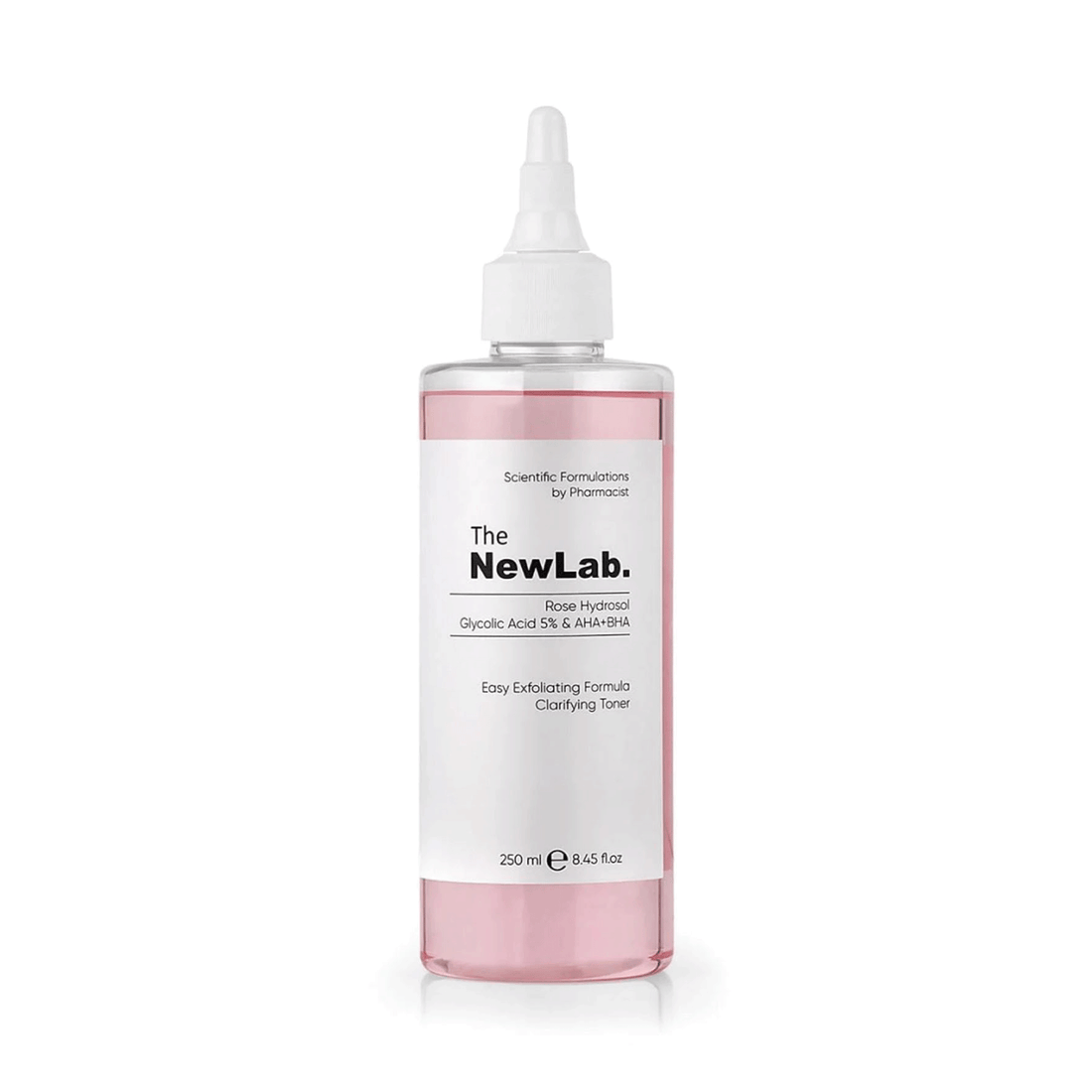
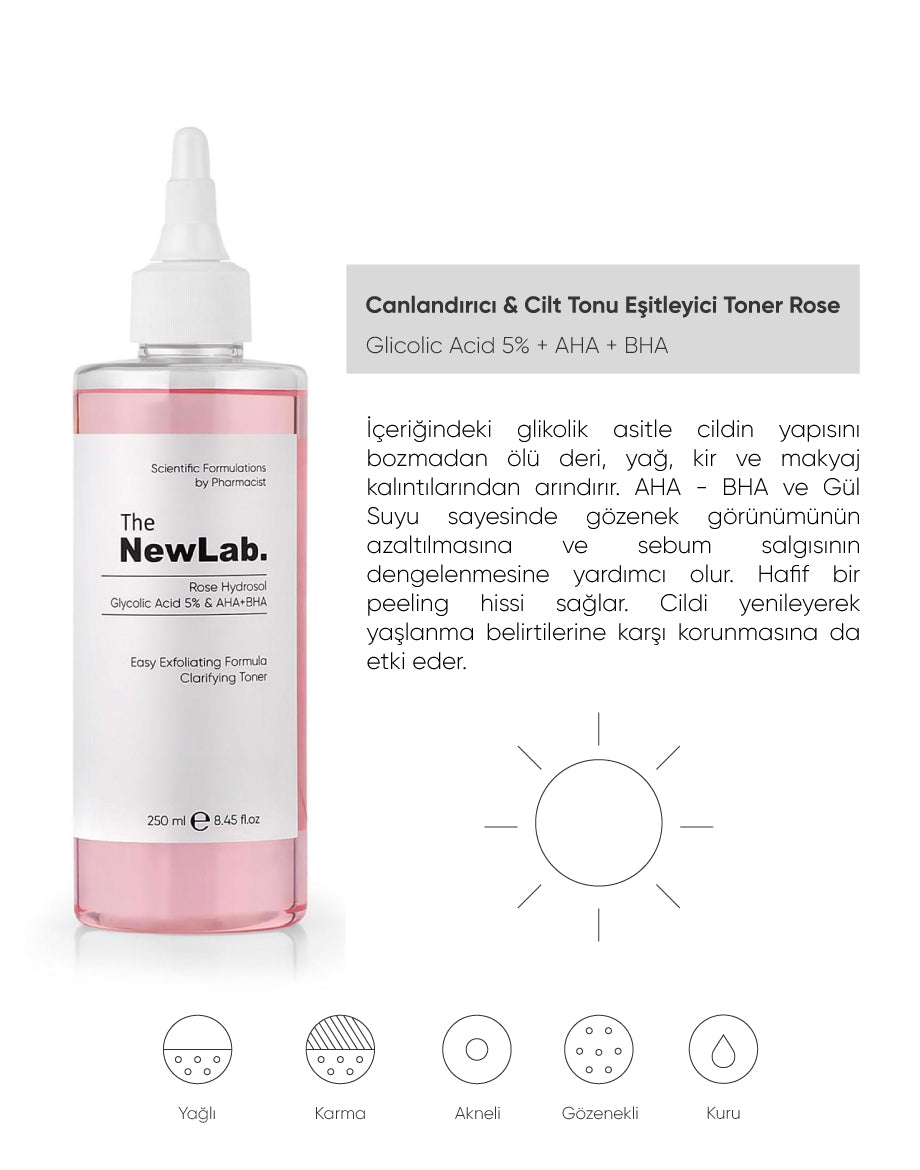 Refreshing & Skin Tone Equalizing Toner Rose Hydrosol Glycolic Acid 5% & AHA+BHA 250 mlVendor:Refreshing & Skin Tone Equalizing Toner Rose Hydrosol Glycolic Acid 5% & AHA+BHA 250 mlThe NewLab.
- Regular price
-
500.44TL - Regular price
-
769.90TL - Sale price
-
500.44TL
Quick view
-
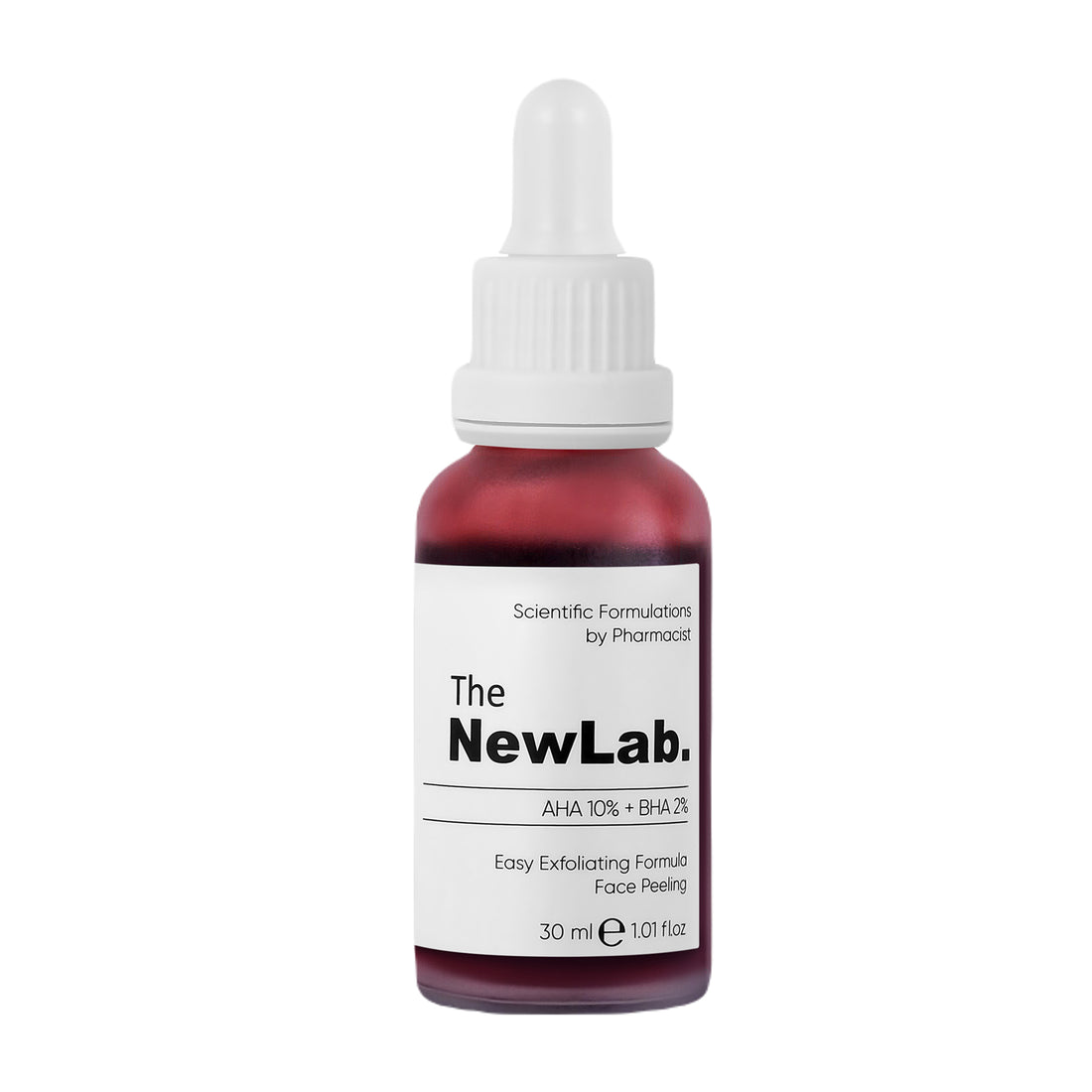
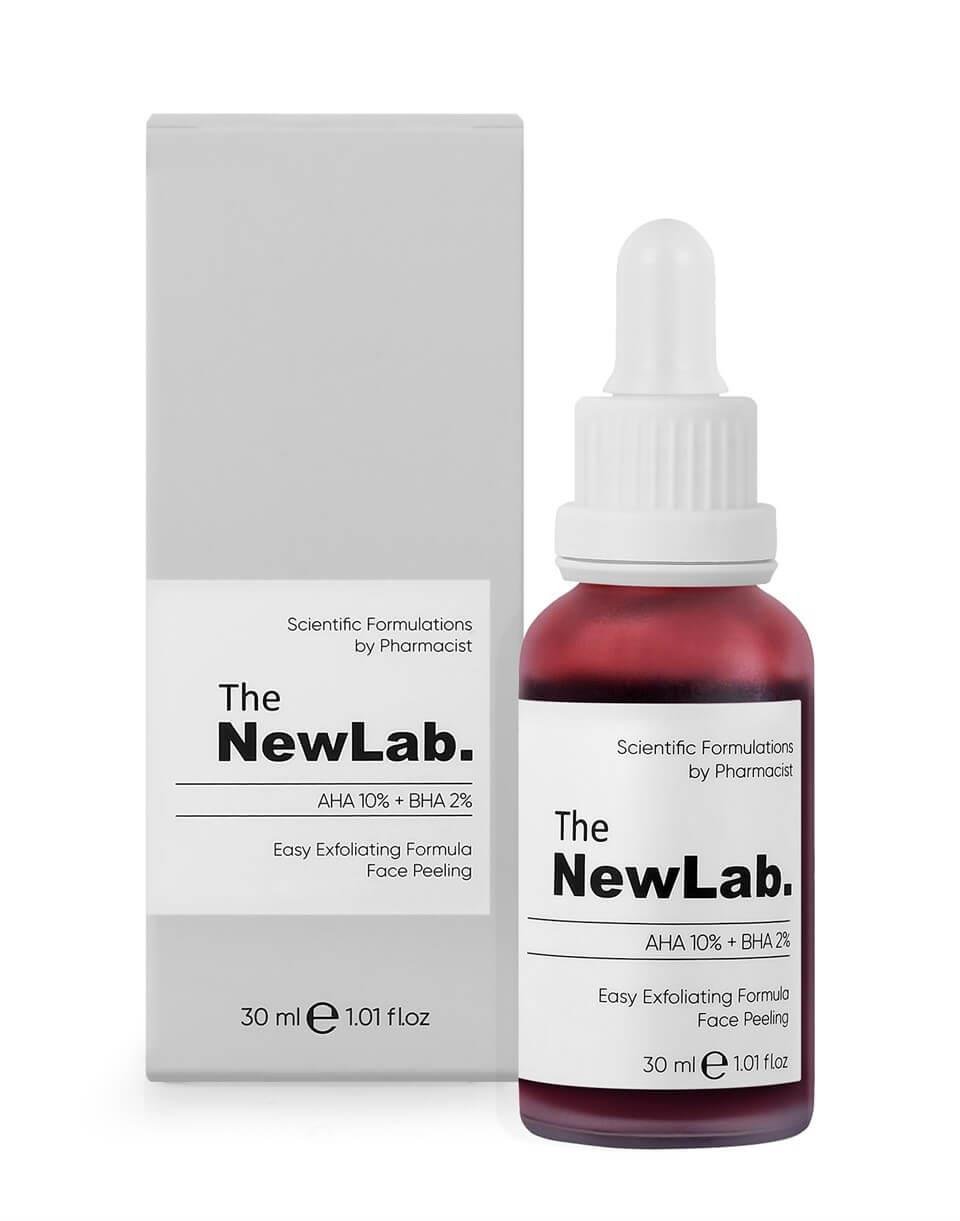 AHA BHA Peeling Face SerumVendor:AHA BHA Peeling Face SerumThe NewLab.
- Regular price
-
454.94TL - Regular price
-
699.90TL - Sale price
-
454.94TL
Quick view
-

 Refreshing & Skin Tone Equalizing Toner Rose Hydrosol Glycolic Acid 5% & AHA+BHA 250 mlVendor:Refreshing & Skin Tone Equalizing Toner Rose Hydrosol Glycolic Acid 5% & AHA+BHA 250 mlThe NewLab.
- Regular price
-
199.99TL - Regular price
-
199.99TL - Sale price
-
199.99TL
Quick view


Why Is AHA (Alpha Hydroxy Acid) Used in Skincare?
Alpha hydroxy acids (AHA) are water-soluble acids that support skin renewal by gently removing dead cells from the skin's surface. Found in various forms, such as glycolic acid derived from sugar cane, lactic acid from milk, and mandelic acid from almonds, AHAs contribute to a smoother, brighter, and younger-looking complexion through their chemical peeling effect. Skincare products containing AHA are effectively used to combat uneven skin tone, fine lines, dullness, acne scars, and pore-related issues.
The NewLab's AHA-containing products are formulated with powerful actives like glycolic acid and lactic acid. You can easily find the AHA product that suits your skincare routine among our peeling serum and toner options.
AHA BHA Peeling Face Serum
AHA BHA Peeling Face Serum is a potent peeling solution containing alpha hydroxy acids and 2% beta hydroxy acid (salicylic acid). While the glycolic acid in its formula gently removes dead skin from the surface, salicylic acid deeply cleanses the pores. With the support of ascorbic acid and hyaluronic acid, your skin is both brightened and hydrated. It is applied twice a week, with at least 3 days between applications during your night routine, and rinsed off with plenty of water after 10 minutes. With regular use, skin texture becomes noticeably smoother, skin tone is evened out, and the appearance of pores is reduced.
Revitalizing & Skin Tone Evening Toner – Glycolic Acid 5% & AHA+BHA
Revitalizing & Skin Tone Evening Toner is a 250 ml formula containing 5% glycolic acid, AHA, and BHA, making it easy to incorporate into your daily care routine. Its rose hydrosol-based structure soothes the skin, while AHA components gently cleanse dead cells, oil deposits, and makeup residue. It is applied at night by pouring it onto a cotton pad, with no rinsing required. With its light peeling effect, the skin is revitalized, pore appearance is reduced, and sebum balance is supported.
AHA Types: Differences Between Glycolic Acid, Lactic Acid, and Mandelic Acid
Alpha hydroxy acids are not a single ingredient, but a family of acids with different molecular sizes. The most common AHA types used in skincare products are glycolic acid, lactic acid, and mandelic acid. Each addresses different skin needs:
Glycolic Acid is the smallest molecular member of the AHA family. This makes it the fastest-penetrating and most potent AHA type. It is preferred for uneven skin tone, fine lines, and dull skin appearance. The NewLab's Glycolic Acid Toner contains 5% glycolic acid.
Lactic Acid has a larger molecular size than glycolic acid and acts more gently. It has a high moisturizing capacity, making it a more suitable AHA type for dry and sensitive skin. Lactic acid is also included in the formula of The NewLab's AHA BHA Peeling Serum.
Mandelic Acid is the AHA type with the largest molecule. Because it penetrates the skin slowly, it carries the lowest risk of irritation. It can be safely preferred, especially for sensitive and darker skin tones. You can also explore The NewLab's mandelic acid collection separately.
What Should the AHA Percentage Be in Skincare?
The concentration of AHA (alpha hydroxy acid) is the most important factor directly affecting the product's efficacy and safety. In products suitable for home use, the concentration is usually between 5% and 10%. For beginners, toners and mild peels containing 5% glycolic acid are ideal. As the skin develops tolerance, you can move up to an 8-10% concentration.
In professional applications, high concentrations such as 20-30% are used; these types of applications must be performed under the supervision of an expert. According to European Union regulations, the total AHA concentration in cosmetic products should not exceed 10%, and the pH value should not fall below 3.5. A pH value around 3.5 allows AHA to show its effect at the highest level, while higher pH values reduce efficacy but also lower the risk of irritation.
The NewLab's Glycolic Acid Toner with a 5% concentration is a safe and effective starting point for both beginners and regular users.
AHA vs BHA: Which One Is Right for Me?
AHA (alpha hydroxy acid) and BHA (beta hydroxy acid) are the two most popular exfoliants in skincare, but they work through different mechanisms. AHA is water-soluble and acts on the surface of the skin; it removes dead cells to even out skin tone, reduces fine lines, and provides a bright appearance. BHA is oil-soluble and penetrates into the pores to clear sebum, dirt, and blockages.
AHA might be the right choice for you if you have uneven skin tone, dullness, fine lines, sun spots, or dry-to-normal skin type. BHA might be more suitable if you have excessive oiliness, blackheads, acne, enlarged pores, or oily-combination skin type. The NewLab's AHA BHA Peeling Serum combines both actives in one product, providing both superficial and pore-clearing effects. You can also browse our collection of BHA-containing products.
AHA vs Retinol: Can They Be Used Together?
AHA and retinol are two of the most powerful actives in skincare, but using them at the same time significantly increases the risk of irritation. Both actives thin the surface layer of the skin and accelerate the renewal process. Therefore, it is not recommended to apply them together in the same night routine.
The safest method is alternative night use: for example, you can plan it as AHA BHA Peeling Serum on Monday and Thursday evenings, and retinol products on other evenings. When using either active, a SPF 50+ sunscreen must be applied in the morning.
AHA vs PHA: Comparison for Sensitive Skin
PHA (polyhydroxy acid) is a larger-molecule and gentler alternative to AHA. PHA types such as gluconolactone and lactobionic acid provide more superficial exfoliation compared to AHA and irritate the skin less. For sensitive, redness-prone, or rosacea-prone skin, PHA may be more suitable.
However, AHA is stronger than PHA in terms of skin renewal capacity. If your skin is sensitive but you want to use AHA, it is recommended to start with a low-concentration (5%) glycolic acid toner or mandelic acid (the gentlest AHA type). The NewLab's 5% Glycolic Acid Toner is a suitable starter product for this purpose.
Active Ingredients That Can Be Used With AHA
Knowing the right combinations is important to increase the effect of AHA-containing products and to keep your skincare routine balanced.
Actives compatible with AHA: Hyaluronic acid (moisture support), niacinamide (barrier strengthening and sebum control), centella asiatica / cica (soothing), and vitamin B5 / panthenol (repair) can be safely combined with AHA.
Actives to be careful with when using AHA: Simultaneous use in the same routine with Retinol and pure Vitamin C (ascorbic acid) can overly irritate the skin. These actives should be used alternatively on different nights.
Frequently Asked Questions
What does AHA do?
AHA (alpha hydroxy acid) is an exfoliant that chemically removes dead cells from the skin's surface. It helps improve uneven skin tone, dullness, fine lines, acne scars, and pore issues. AHA also increases the skin's moisture retention capacity and supports collagen production.
How often should AHA be used per week?
The frequency of AHA use depends on the concentration of the product and skin tolerance. Peeling serums (e.g., AHA BHA Peeling Serum) should be applied twice a week, with at least 3 days between applications. Low-concentration AHA toners can be used in the daily night routine. Beginners should start with 1-2 times per week to let the skin get used to it.
Is sunscreen mandatory when using AHA?
Yes, it is absolutely mandatory. AHA increases the skin's sensitivity to the sun (photosensitivity). Anyone using products containing AHA must use a broad-spectrum SPF 50+ sunscreen for at least 24 hours after application. This rule applies throughout the year, even on cloudy days.
How long does it take for AHA to show results?
The initial effects are usually felt within 2-4 weeks: you will notice the skin looking smoother and brighter. Significant improvement in uneven skin tone, fine lines, and blemishes requires 8-12 weeks of regular use. Patient and consistent use yields the best results.
Can AHA be used on sensitive skin?
Sensitive skin can use AHA, but a cautious start is necessary. Since mandelic acid is the AHA type with the largest molecule, it is the most suitable option for sensitive skin. Sensitive skin that will use glycolic acid should start with a low concentration (5%), apply it once a week, and observe the skin's reaction. Also, using a moisturizer after AHA and not neglecting sunscreen is very important.
Can AHA and BHA be used together?
Yes, AHA and BHA can be used together, and this combination can yield very effective results. While AHA removes dead cells on the surface of the skin, BHA penetrates into the pores to clear sebum and blockages. The NewLab's AHA BHA Peeling Face Serum provides both superficial and deep cleansing by optimizing these two actives in a single formula.
How is AHA peeling applied?
AHA BHA Peeling Serum is applied to clean and dry skin, excluding the eye area, in the night routine. After waiting for 10 minutes, it is rinsed off with plenty of water. A moisturizer should be applied after the application, and sunscreen must be used the next day. It is recommended to use it twice a week, with at least 3 days between applications.
Are AHA toners or serums more effective?
AHA toners and AHA serums work at different concentrations and application frequencies. AHA toner (5% glycolic acid) is suitable for daily use with a lower concentration and provides light cleansing. AHA peeling serum, on the other hand, is used twice a week with a more intense formula and offers a stronger renewal effect. Both can be used on different days to create a comprehensive AHA care routine.
Can AHA be used during pregnancy?
Low-concentration AHA products (5-10% glycolic acid, lactic acid) are generally considered safe for topical use during pregnancy. However, high-concentration chemical peels are not recommended during pregnancy. In any case, it is advised to consult your doctor before using any product with active ingredients during pregnancy and breastfeeding.
Is skin peeling normal after AHA use?
Mild peeling or flaking is a normal reaction, especially in the first weeks of AHA use. This is part of the process of the skin removing its dead cells and usually subsides within 1-2 weeks. However, if there is severe redness, burning, or excessive peeling, product use should be stopped and a dermatologist should be consulted. It is important to reduce the frequency of use until the skin gets used to it and to apply plenty of moisturizer.
Explore The NewLab's AHA-containing products to strengthen your skincare routine with AHA (alpha hydroxy acid). You can find the most suitable AHA product for your skin with our peeling products and toner collection. Free shipping on all orders.