
6 products
-
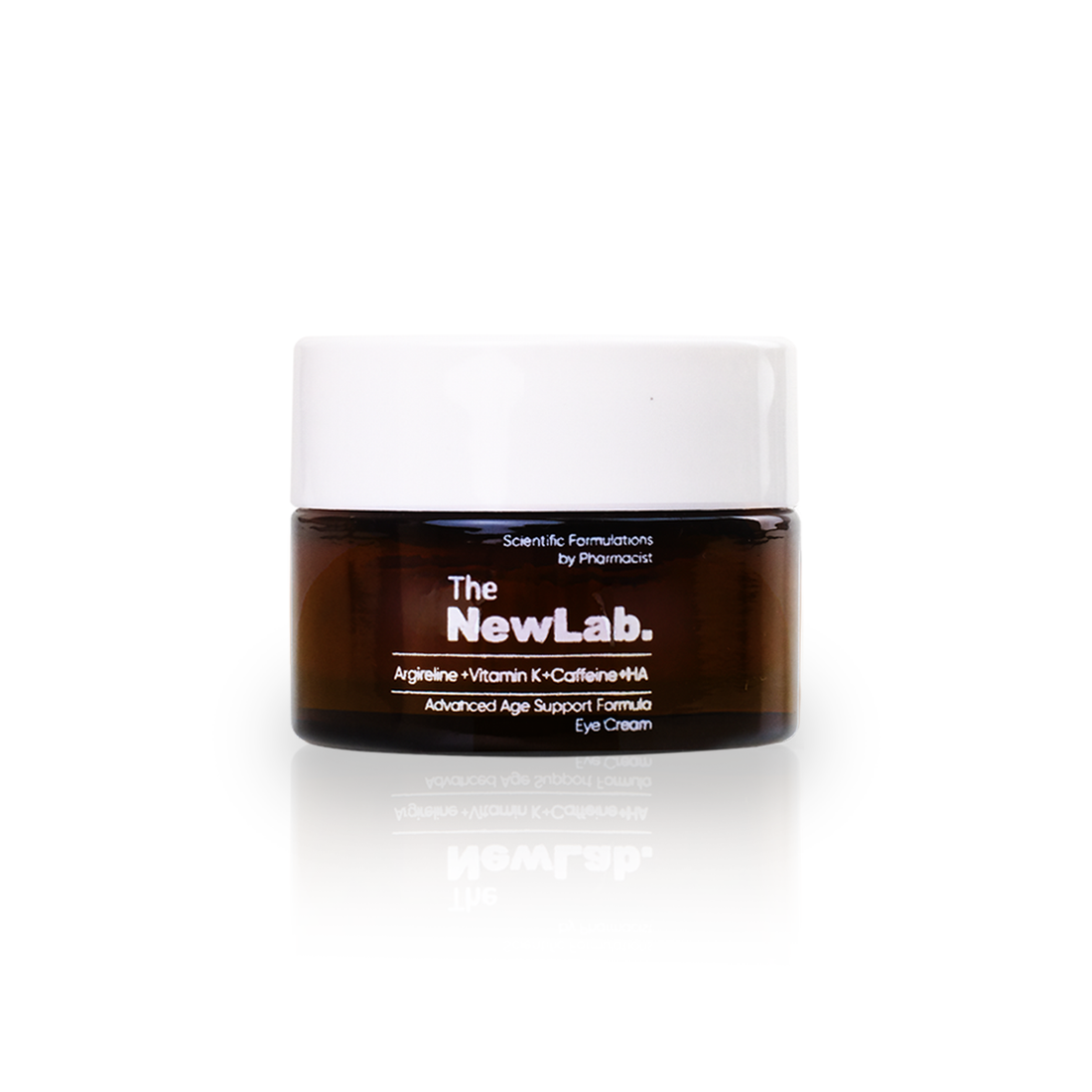
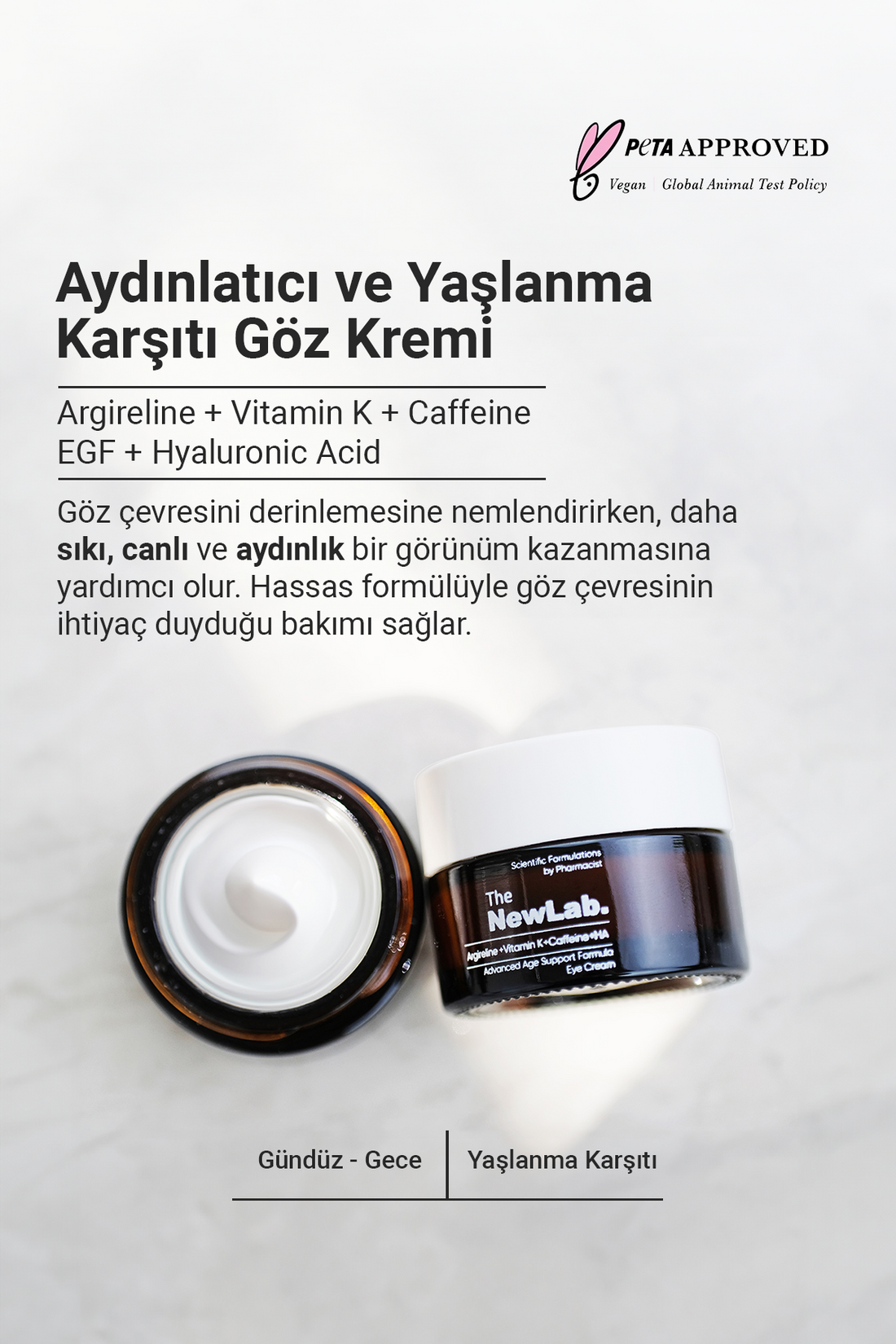
 Brightening and Anti-Aging Eye CreamVendor:Brightening and Anti-Aging Eye CreamThe NewLab.
- Regular price
-
799.44TL - Regular price
-
1,229.90TL - Sale price
-
799.44TL
YENİQuick view
-
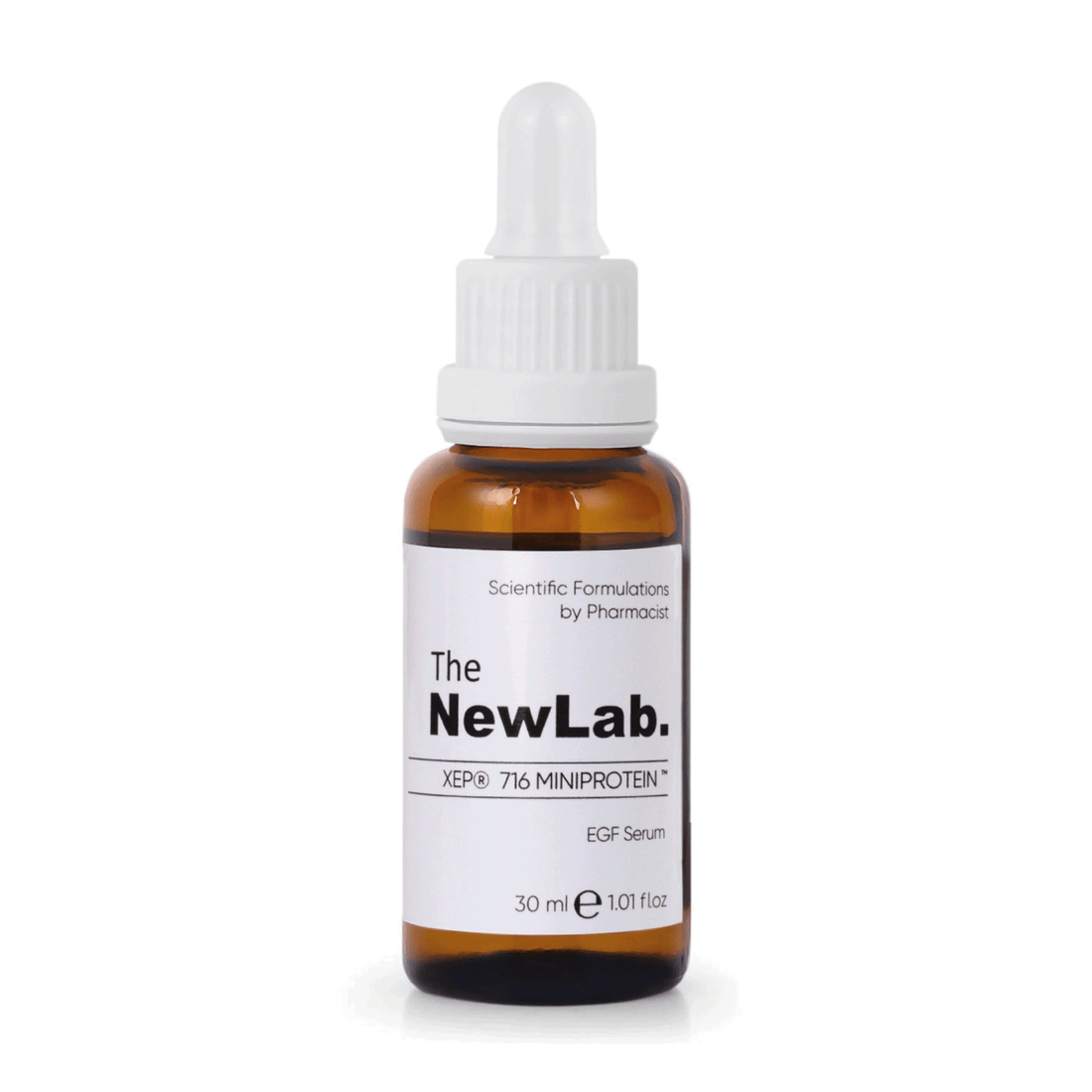
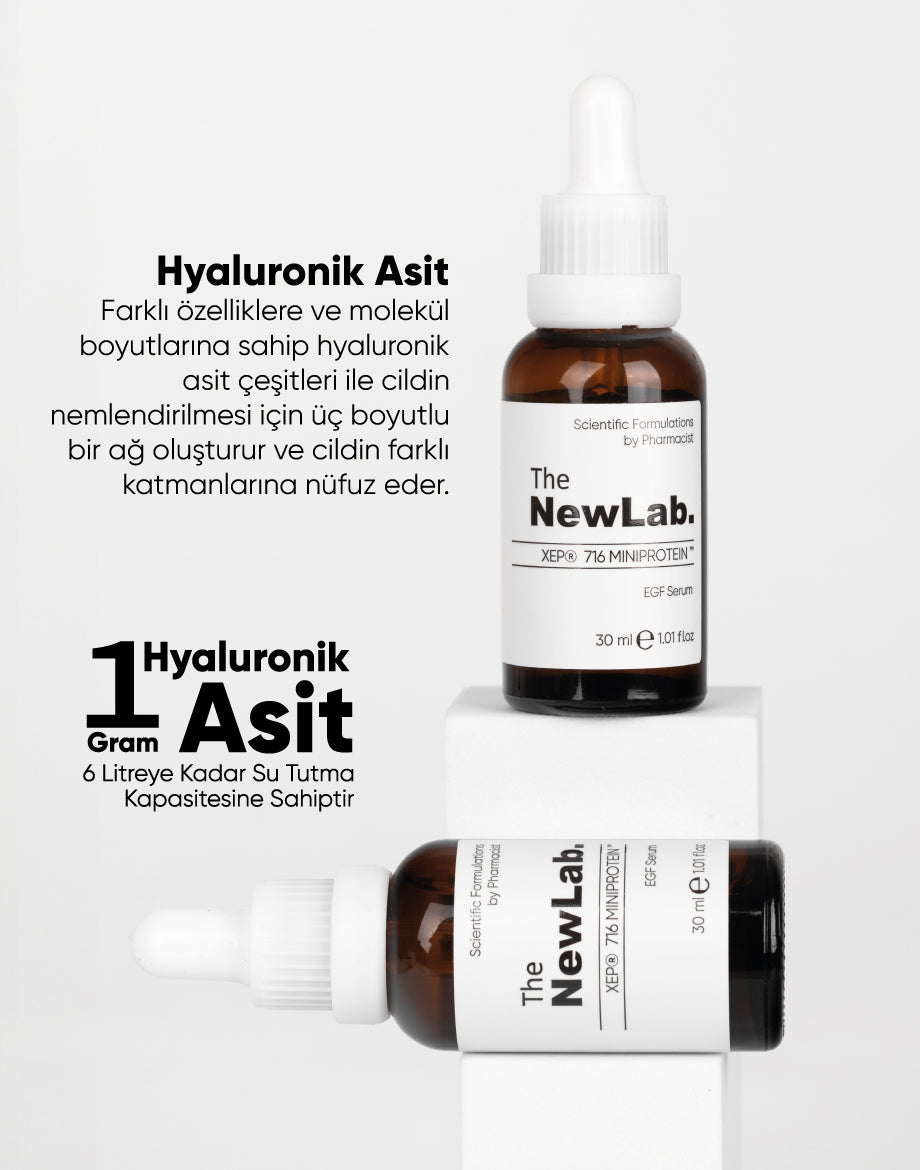 EGF Skin Renewing SerumVendor:EGF Skin Renewing SerumThe NewLab.
- Regular price
-
571.94TL - Regular price
-
879.90TL - Sale price
-
571.94TL
YENİQuick view
-
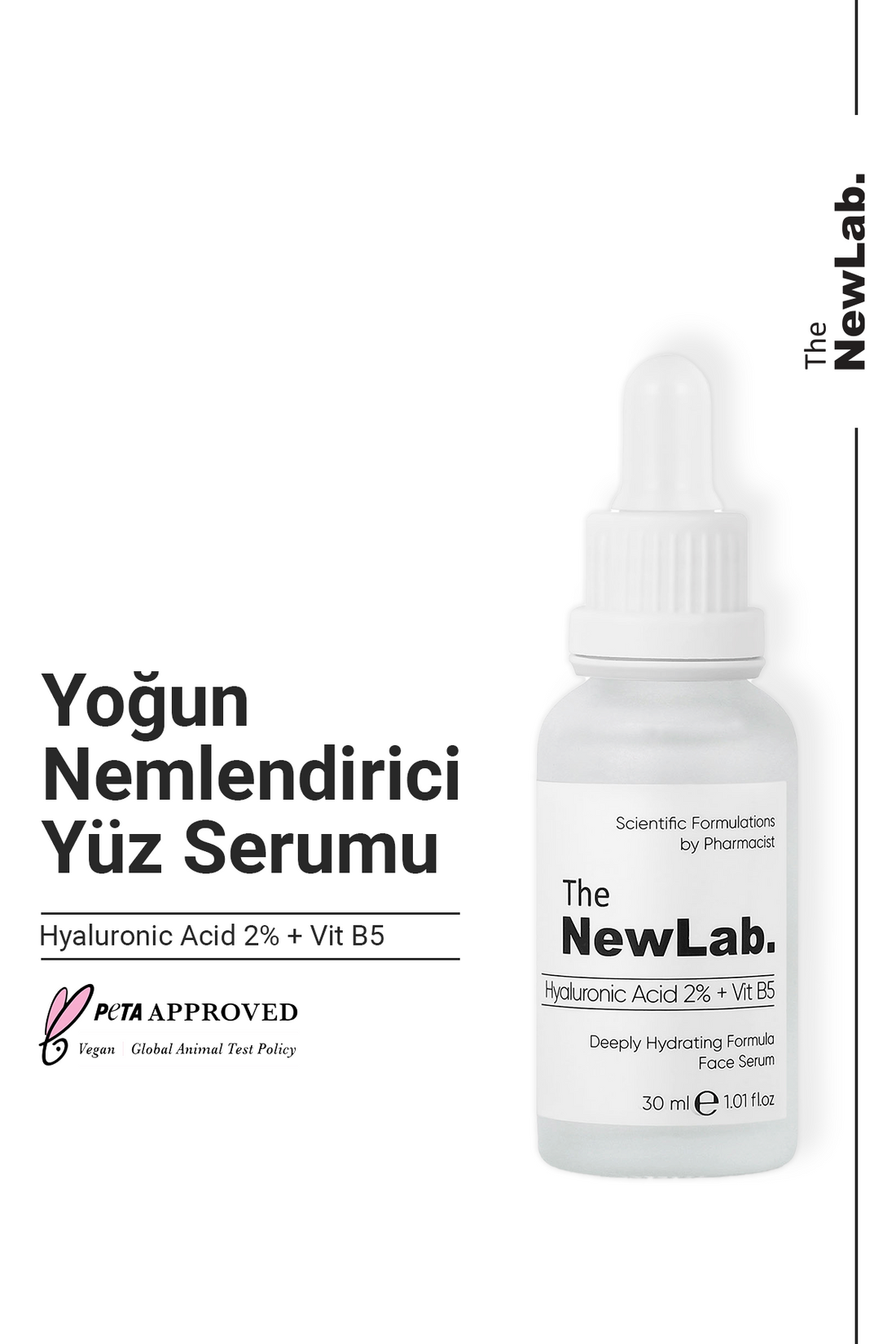
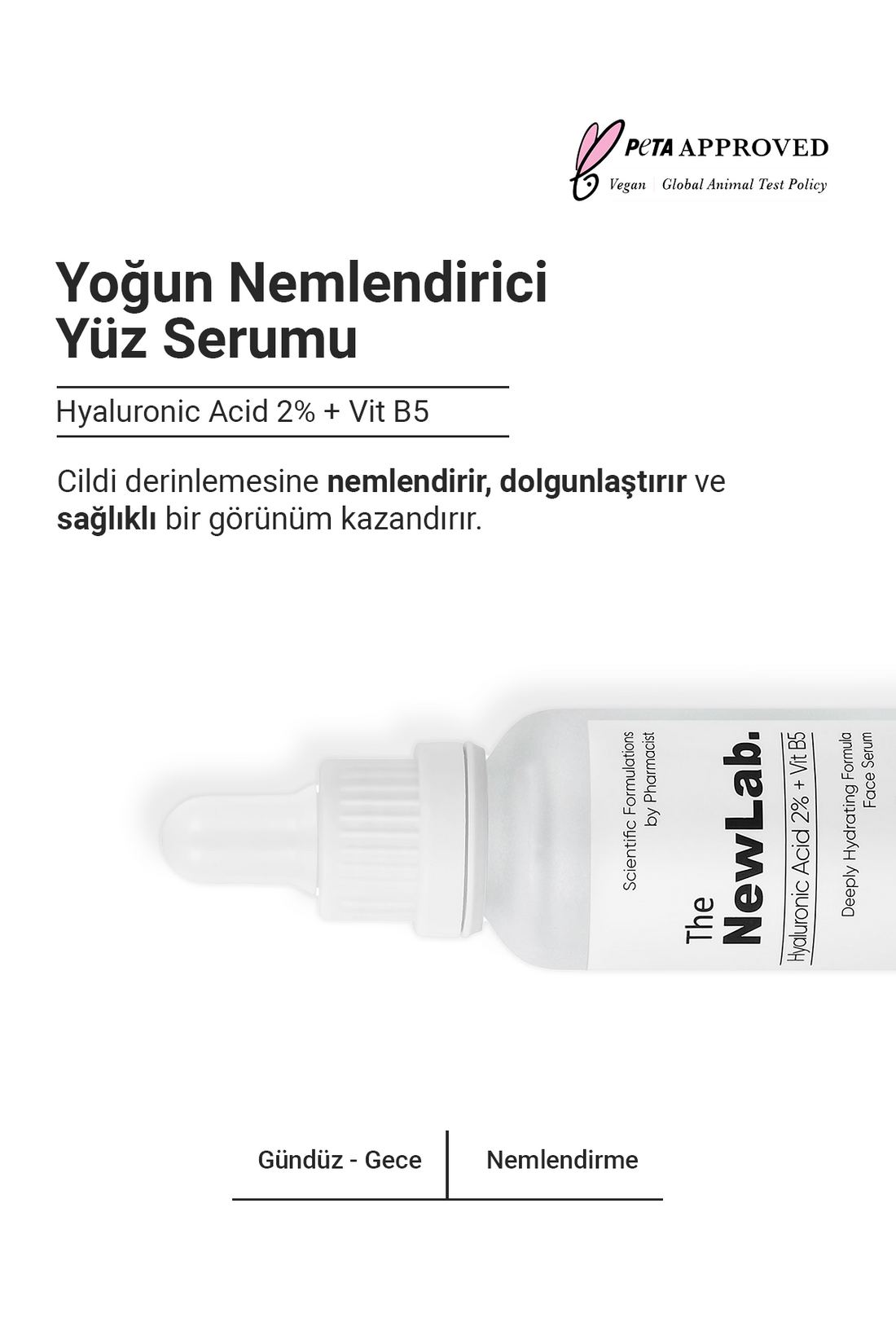 Intensive Hydrating Hyaluronic Acid Serum 2% + Vit B5 30 mlVendor:Intensive Hydrating Hyaluronic Acid Serum 2% + Vit B5 30 mlThe NewLab.
- Regular price
-
454.94TL - Regular price
-
699.90TL - Sale price
-
454.94TL
Quick view
-

 Anti-Acne and Anti-Blemish Sunscreen (50 SPF) 50 mlVendor:Anti-Acne and Anti-Blemish Sunscreen (50 SPF) 50 mlThe NewLab.
- Regular price
-
630.44TL - Regular price
-
969.90TL - Sale price
-
630.44TL
Quick view
-
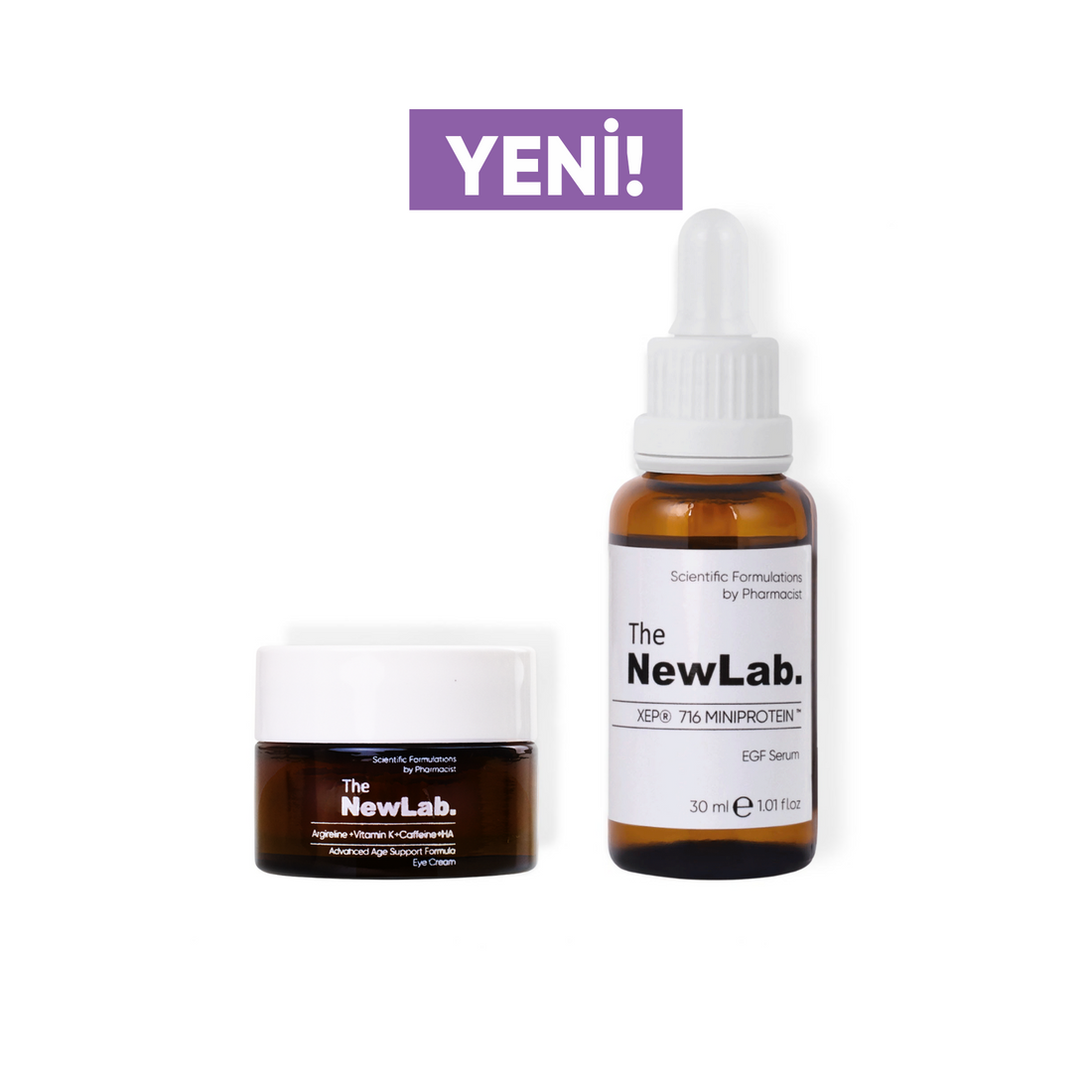
 Renewing and Anti-Aging Skincare SetVendor:Renewing and Anti-Aging Skincare SetThe NewLab.
- Regular price
-
1,234.99TL - Regular price
-
1,899.99TL - Sale price
-
1,234.99TL
Quick view
-

 Anti-Acne and Anti-Blemish Sunscreen (50 SPF) 50 mlVendor:Anti-Acne and Anti-Blemish Sunscreen (50 SPF) 50 mlThe NewLab.
- Regular price
-
199.99TL - Regular price
-
199.99TL - Sale price
-
199.99TL
Quick view


What is Hyaluronic Acid and Why is it Used in Skincare?
Hyaluronic acid (HA) is a glycosaminoglycan found naturally in the dermis and epidermis layers of the skin. Its most well-known property is its capacity to hold up to 1000 times its own weight in water—this makes it nature's most powerful moisturizing molecule. Hyaluronic acid is a key building block that provides the skin's plumpness, elasticity, and hydrated appearance, and it is also found in joint fluid, connective tissue, and ocular fluid.
However, the body's natural production of hyaluronic acid begins to decrease gradually from the age of 25—by age 50, approximately half of the naturally occurring HA has been lost. This loss leads to a reduction in the skin's moisture-retention capacity, loss of plumpness, the appearance of fine lines, and decreased elasticity. Skincare products containing hyaluronic acid are used precisely to fill this void from the outside—restoring the moisture-retention capacity the skin has lost.
Despite the word "acid" in its name, hyaluronic acid is completely different from exfoliating acids like AHA or BHA. It does not peel the skin, cause irritation, or make it sun-sensitive. It is an entirely moisturizing active ingredient and can be safely used on all skin types—sensitive, dry, oily, acne-prone, and mature. It is also safe during pregnancy and breastfeeding. In short: even though it is called an "acid," it is one of the gentlest active ingredients.
The NewLab Skincare Products Containing Hyaluronic Acid
The NewLab offers comprehensive hydration in serums, creams, sunscreens, and eye care products by using hyaluronic acid in different formulations and molecular weights.
Intense Hydrating Hyaluronic Acid Serum 2% + Vit B5
As The NewLab's most intensely hydrating product, this serum combines 5 different forms of hyaluronic acid in a single formulation, providing multi-dimensional hydration that reaches every layer of the skin:
1. Hyaluronic Acid (High Molecular Weight): Forms a moisture film on the skin surface, preventing water evaporation. Provides an instant feeling of plumpness and softness.
2. Sodium Hyaluronate: The sodium salt of hyaluronic acid—with a smaller molecular structure, it penetrates the skin more easily and stores moisture in deeper layers.
3. Hydrolyzed Hyaluronic Acid (Low Molecular Weight): Fragmented HA molecules reach the lower layers of the skin, providing hydration at the dermal level. Contributes to plumping fine lines from within.
4. Sodium Hyaluronate Crosspolymer: Cross-linked HA—forms a 3D network on the skin to provide long-term moisture release. It creates a moisturizing effect that lasts for hours, not just once.
5. Hydrolyzed Glycosaminoglycans: A fragmented form of glycosaminoglycans, which are the building blocks of HA—supports the skin's own HA production and strengthens the barrier function.
Panthenol (Vitamin B5) in the formula soothes the skin and supports moisture retention, while Allantoin contributes to skin repair and Lactic Acid enhances HA absorption with a mild exfoliating effect.
Active Ingredients: 5-Form Hyaluronic Acid Complex 2%, Panthenol (Vitamin B5), Allantoin, Lactic Acid
Intense Hydrating Cica Cream
Formulated for sensitive and dry skin, this cream provides multi-layered hydration with 4D Hyaluronic Acid technology. While Centella Asiatica Extract and Madecassoside soothe the skin and support barrier repair, Ceramide strengthens the structural integrity of the skin barrier. It is an ideal moisturizer as a sealing layer over hyaluronic acid serum. → Detailed information about 4D Hyaluronic Acid technology
Active Ingredients: 4D Hyaluronic Acid, Centella Asiatica Extract, Ceramide, Bisabolol, Madecassoside
Sun Protective SPF 50 Sun Drops Serum
Combining broad-spectrum physical sun protection with the hydrating power of hyaluronic acid, this serum provides protection to the skin without a drying effect. Hyaluronic Acid, Provitamin B5, and Niacinamide in the formula keep the skin hydrated throughout the day and support barrier function.
First application: Hyaluronic acid serum instantly draws in moisture, creating a sense of plumpness and softness in the skin. Tightness due to dryness decreases within minutes.
1-2 weeks: The skin's moisture balance stabilizes, and a dull, matte appearance is replaced by a bright, healthy glow. Makeup applies more smoothly.
4-8 weeks: The skin barrier is strengthened, and the appearance of fine lines due to dryness is reduced. Skin elasticity increases, resulting in a plumper, more youthful appearance.
Long-term: With regular use, the skin's overall moisture capacity increases—meaning the skin becomes less dependent on external hydration.
How Does Hyaluronic Acid Work? Why is Molecular Weight Important?
The skin's response to hyaluronic acid depends directly on its molecular weight (size). HA molecules of different sizes perform functions in different layers of the skin:
High Molecular Weight HA (>1000 kDa): Due to its large size, it cannot penetrate the skin and remains on the surface. It prevents transepidermal water loss (TEWL) by forming an invisible moisture film on the skin. It provides an instant plumping and softening effect. It acts as a film-forming (occlusive) agent.
Medium Molecular Weight HA (100-1000 kDa): Penetrates the upper layers of the epidermis. It hydrates the skin surface while also providing a smoothing effect.
Low Molecular Weight HA (<100 kDa): Thanks to its small size, it reaches deeper layers of the skin. By providing hydration at the dermal level, it contributes to plumping fine lines from within. It has also been shown in scientific studies to stimulate the skin's own hyaluronic acid and collagen synthesis.
Cross-Linked HA (Crosspolymer): A 3D network structure formed by linking HA molecules together. By creating a long-term moisture reservoir in the skin, it provides constant moisture release for hours. The "slow-release" effect means sustainable hydration, not just a one-time boost.
The NewLab advantage: The Hyaluronic Acid 2% + Vit B5 Serum offers a multi-layered hydration system that combines all 4 of these layers (plus Hydrolyzed Glycosaminoglycans) in a single formula. Each molecular weight performs its role at a different skin depth, ensuring complete hydration from the surface to the deep layers.
Benefits of Hyaluronic Acid Serum for the Skin
Deep and Multi-Layered Hydration: HA of different molecular weights provides hydration from the skin's surface to its deepest layers. It creates a 3D hydration effect, not a single-dimensional one. It provides immediate relief and a sense of plumpness for dry, tight, and dull skin.
Plumping Effect: The intense water-retention capacity of HA provides physical plumpness by filling skin cells with water. This effect helps temporarily fill in fine lines and superficial wrinkles—almost like a natural "filler" effect.
Strengthening the Skin Barrier: It supports the healthy function of the barrier by maintaining the skin's moisture balance. When moisture loss decreases, the barrier strengthens, resistance to external factors increases, and the risk of irritation drops.
Delaying Signs of Aging: Low molecular weight HA provides a long-term anti-aging effect by stimulating the skin's own collagen and HA production. Hydrated skin ages more slowly than dry skin because water molecules maintain the flexibility of collagen fibers.
Enhancing Active Ingredient Absorption: By increasing the skin's moisture level, hyaluronic acid helps subsequent active ingredients (Vitamin C, niacinamide, retinol, etc.) absorb better. Therefore, it acts as a "primer" in the skincare routine.
Supporting Wound Healing and Repair: HA plays a critical role in the skin's natural healing process. It regulates inflammation, guides cell migration, and supports the formation of new tissue. It contributes to the recovery of skin damaged by peels, lasers, or sun exposure.
How to Apply Hyaluronic Acid Correctly? (Critical Rules)
The efficacy of hyaluronic acid depends heavily on the correct application technique. Incorrect application can cause more harm than good:
Hyaluronic acid works by drawing moisture from the environment. If the environment is dry (air-conditioned room, winter months, low humidity) and your skin is also dry, and you do not seal it with a moisturizer, the HA may draw moisture from the lower layers of your skin when it cannot find any in the environment—this leads to even further skin dryness. The solution is simple: always apply HA to damp/moist skin and always seal it with a moisturizer or oil-based product.
1. Cleansing: Wash your face with a gentle cleanser. Purify with The NewLab Cleansers.
2. Apply to Damp Skin: This is the most critical step. After cleansing your face, apply the HA serum while the skin is still damp (without completely drying with a towel) or after lightly dampening with thermal water/toner. Applying HA to dry skin reduces its efficacy.
3. Serum Application: Take 3-4 drops of Hyaluronic Acid 2% + Vit B5 Serum and spread it gently onto your face and neck by patting. Distributing with light touches (pat-pat) instead of rubbing increases absorption.
4. Sealing (Do Not Skip This Step!): After the serum has absorbed (1-2 minutes), be sure to apply a moisturizer or an occlusive (moisture-sealing) product on top. The NewLab Cica Cream or a product containing squalane seals the moisture drawn by the HA onto the surface and prevents evaporation.
5. Sunscreen (morning): Apply SPF 30+ sunscreen as the final step in your morning routine. Since The NewLab SPF 50 Sun Drops already contains hyaluronic acid, it provides both protection and extra hydration.
Frequency of use: Can be used safely twice a day, morning and evening. It does not make the skin sun-sensitive and is suitable for use in all seasons.
Hyaluronic Acid vs. Squalane: Which is a Better Moisturizer?
These two super moisturizers are not rivals but complements—because they work through completely different mechanisms:
Hyaluronic Acid (Humectant — Moisture-Drawing): Water-based. It draws water molecules from the environment and lower layers of the skin to transport them into the skin. It works like a "sponge"—it absorbs and holds moisture. Provides a plumping effect.
Squalane (Emollient + Occlusive — Softening + Moisture-Sealing): Oil-based. By integrating into the skin's lipid layer, it seals in water and prevents evaporation. It works like a "shield"—it keeps moisture inside. Provides a softening and barrier-strengthening effect.
Strategy for combined use: First the HA serum (draws and fills with moisture) → Then the product containing squalane (seals the moisture). This sequence is the gold standard of moisturizing. The duo of The NewLab's HA Serum + Cica Cream applies this strategy within a single brand.
Hyaluronic Acid vs. Collagen: What is the Difference?
Both are found in the skin's natural structure and decrease with age, but their roles are different:
Hyaluronic Acid: Provides the skin's moisture-retention capacity. Gives plumpness and elasticity by drawing in water. When applied topically (externally), it can reach different layers of the skin.
Collagen: Forms the skin's structural skeleton. Provides firmness, tension, and durability. Because topically applied collagen molecules are large, they cannot penetrate deep—they show a moisturizing effect on the surface.
Combined use: While HA increases the skin's water capacity, collagen provides structural support. Together, they offer both plumpness and firmness. The combination of The NewLab's HA Serum (hydration) + Collagen + Copper Peptide Serum (structural support) creates a powerful anti-aging duo.
Best Combinations: Which Actives Should Hyaluronic Acid be Used With?
HA + Niacinamide: Hydration + barrier strengthening + sebum control. While Niacinamide supports ceramide production, HA provides moisture supplementation. They can be used smoothly in the same routine.
HA + Retinol: Hydration + anti-aging. HA is an ideal partner for balancing the dryness and sensitivity that retinol may cause. Can be used in the evening: HA serum → retinol serum → moisturizer sequence.
HA + Vitamin C: Hydration + brightening + antioxidant protection. By applying the HA serum after the Vitamin C serum, both antioxidant effects and deep hydration are achieved.
HA + Squalane: The gold standard of moisturizing. HA draws moisture, squalane seals it. The NewLab's HA Serum + Retinol-Squalene Serum pair perfectly in the evening routine.
HA + Alpha Arbutin: Hydration + blemish removal. As HA hydrates the skin, it enhances the absorption of Alpha Arbutin, strengthening its blemish-lightening effect.
HA + AHA / BHA: Post-exfoliation repair. Applying HA serum after an AHA/BHA peel soothes sensitive skin and restores moisture balance.
Is Hyaluronic Acid Suitable for Every Skin Type?
Dry Skin: The skin type that needs HA the most. It has a powerful effect in deep hydration, plumping, and reducing fine lines caused by dryness. Be sure to seal the HA serum with a moisturizer cream.
Oily Skin: Its water-based structure does not feel heavy on oily skin and does not clog pores. Oily skin also needs moisture—HA is the ideal active ingredient that provides hydration without adding oil. For oily skin, HA serum alone (without moisturizer) might be sufficient.
Combination Skin: Balances both dry and oily zones. Can be personalized by applying more drops to dry areas and fewer to oily areas.
Sensitive and Reactive Skin: As HA is a molecule naturally found in the skin's structure, the risk of allergic reaction is extremely low. It has a soothing effect and can be safely used on sensitive skin.
Acne-Prone Skin: With its non-comedogenic structure, it does not clog pores. It is an ideal supporter for maintaining moisture balance alongside drying actives used in acne treatment (retinol, BHA, benzoyl peroxide).
Mature Skin: Supplementing natural HA that decreases with age restores plumpness, elasticity, and moisture capacity.
Points to Consider
Apply to damp skin: The most critical rule. Apply HA while the skin is still damp after cleansing or after moisturizing with toner/thermal water. Applying it alone to dry skin and in a dry environment can lead to skin dehydration.
Seal it on top: Do not leave the HA serum without applying a moisturizer cream, oil, or an occlusive product on top. Unsealed HA may release the moisture it has drawn back into the environment.
Application technique: Patting the product into the skin instead of rubbing it ensures better absorption of the HA.
Caution in winter and air-conditioned environments: HA may be insufficient on its own in low-humidity environments. In such cases, it is crucial to lock in the HA serum with a rich moisturizer containing squalane or ceramides (e.g., Cica Cream).
Storage: Store in a cool, dry place away from direct sunlight. Use within 12 months after opening.
Frequently Asked Questions
When should hyaluronic acid serum be used, morning or night?
Both. Hyaluronic acid can be safely used twice a day, in the morning and at night. When used in the morning, it creates an excellent base under makeup and keeps the skin hydrated throughout the day. When used at night, it supports the skin's renewal process while you sleep. Since it does not make the skin sensitive to the sun, it can be used at any time of the year.
Can hyaluronic acid be used around the eyes?
Yes. Hyaluronic acid is safe for the thin and delicate skin around the eyes. It helps reduce dryness, fine lines, and a tired appearance in the eye area. The NewLab HA serum can also be used around the eyes. Additionally, eye care products formulated specifically for the eye area also contain hyaluronic acid.
Can hyaluronic acid be used during pregnancy?
Yes. Since hyaluronic acid is a substance naturally produced by the body, it can be safely used during pregnancy and breastfeeding. It is not an active ingredient to be avoided during pregnancy, unlike retinol or high-concentration acids. It is an ideal moisturizer to combat skin dryness and sensitivity that may increase during pregnancy.
Can hyaluronic acid be used on oily skin?
Absolutely yes. The water-based and non-comedogenic structure of HA provides hydration to oily skin without feeling heavy. Oily skin also needs moisture—oily skin that doesn't receive enough hydration may produce more sebum, increasing oiliness. When the skin's moisture needs are met with HA, sebum production can be balanced.
Can hyaluronic acid be used together with niacinamide?
Yes, they are a perfect duo. While niacinamide strengthens the skin barrier by supporting ceramide production, HA increases the skin's moisture capacity. They can be used together in the same routine without any issues. Order of application: HA serum → niacinamide serum, or they can be applied mixed together.
Can hyaluronic acid be used together with retinol?
Yes, and it is recommended. Retinol can dry out and sensitize the skin—the HA serum is an ideal supporter to balance these side effects. In the evening routine: it can be used in the order of HA serum → retinol serum → moisturizer.
Can I use hyaluronic acid serum without a moisturizer?
If your environment is sufficiently humid (after a shower, humid climate) and you have oily skin, the HA serum might be enough on its own. However, in dry environments (air-conditioned spaces, winter months) or for dry/combination skin, you must lock it in with a moisturizer cream afterward. If not locked in, the moisture drawn by the HA can evaporate back into the environment.
What does 4D Hyaluronic Acid mean?
4D Hyaluronic Acid is a combination of HA with different molecular weights that target 4 different layers of the skin. The NewLab Cica Cream contains this technology. For detailed information → Products Containing 4D Hyaluronic Acid
At what age should hyaluronic acid be started?
There is no age limit for hyaluronic acid—it can be safely used at any age. Since the skin's natural HA production begins to decrease from the age of 25, regular use from this age onward is a protective approach. However, younger skin types suffering from dryness can also benefit from HA. In short: if your skin needs moisture, you can use HA.
Can hyaluronic acid serum be used under makeup?
Yes, it is an excellent makeup base. HA serum hydrates and smooths the skin, ensuring the foundation adheres more evenly. It does not leave a sticky feeling and helps makeup stay fresh throughout the day. Morning routine: cleansing → toner → HA serum → moisturizer → sunscreen → makeup.