
2 products
-
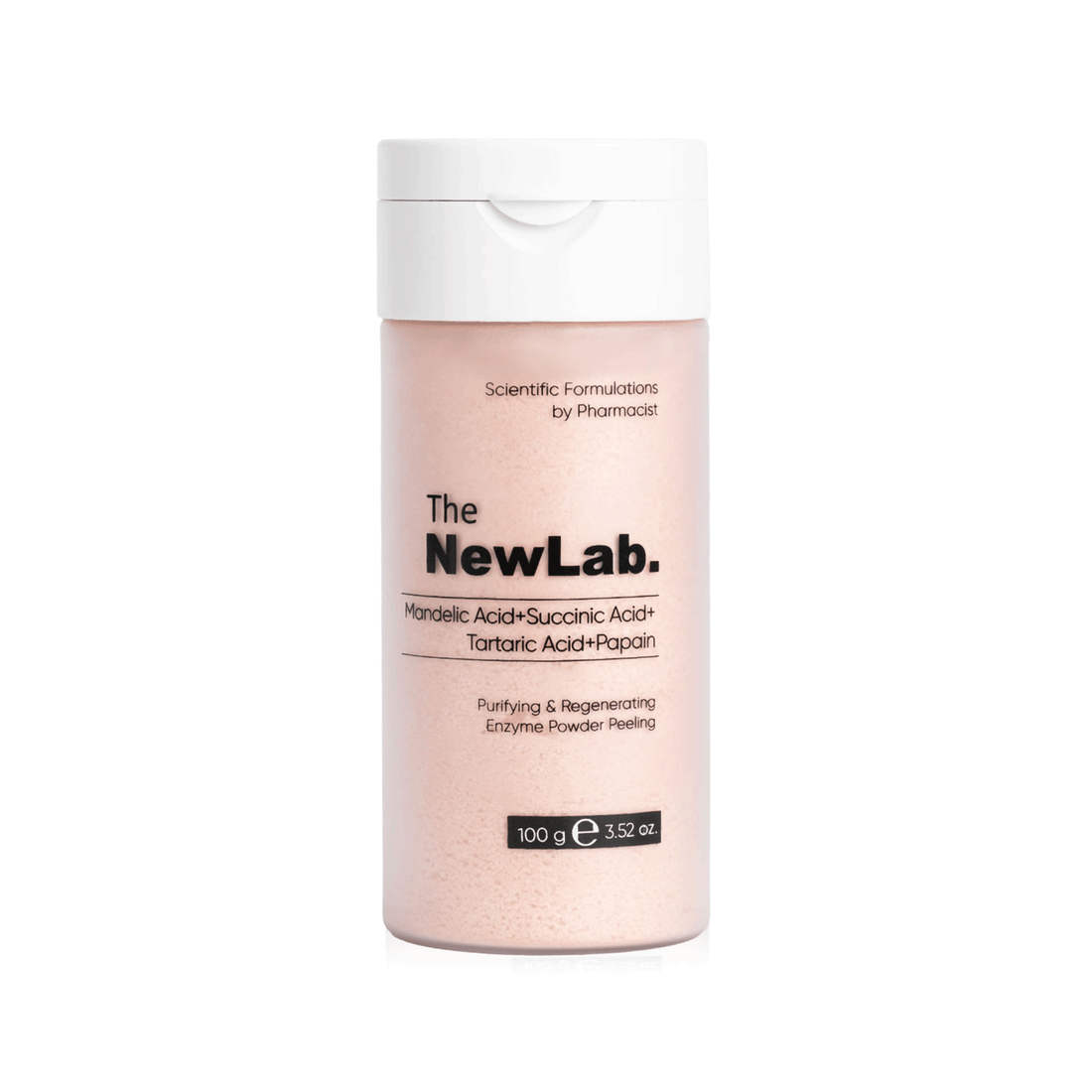
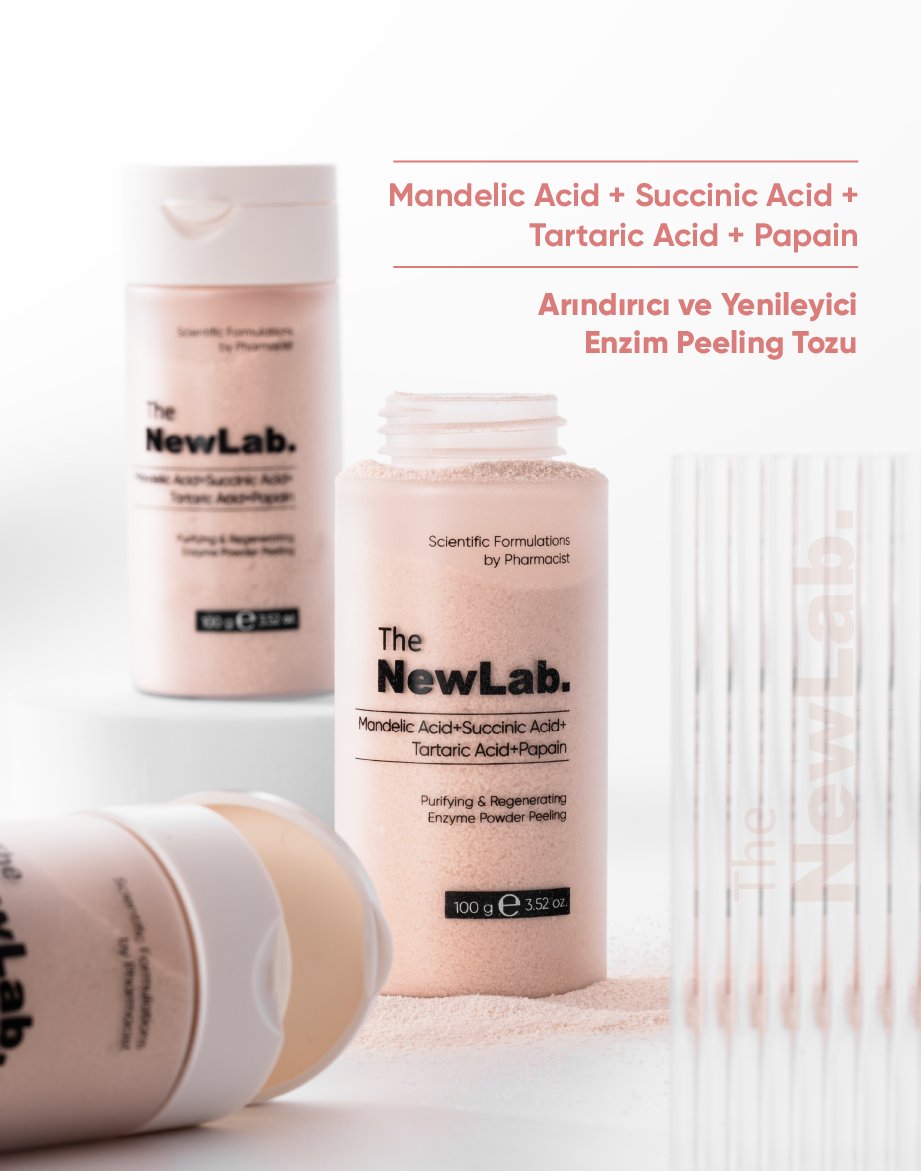 Purifying and Renewing Enzyme Powder Peeling 100g (Mandelic Acid + Succinic Acid + Tartaric Acid + Papain)Vendor:Purifying and Renewing Enzyme Powder Peeling 100g (Mandelic Acid + Succinic Acid + Tartaric Acid + Papain)The NewLab.
- Regular price
-
844.94TL - Regular price
-
1,299.90TL - Sale price
-
844.94TL
YENİQuick view
-
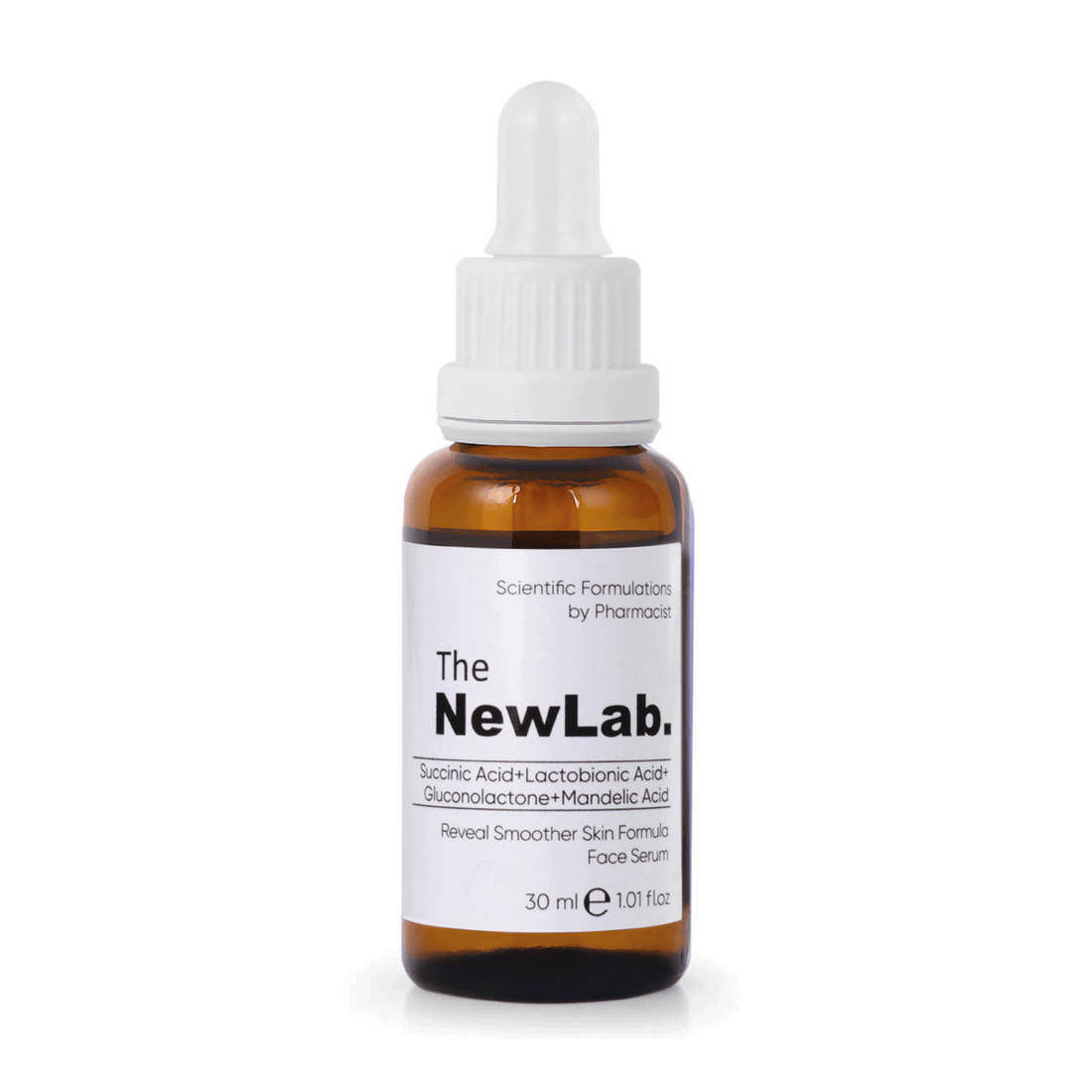
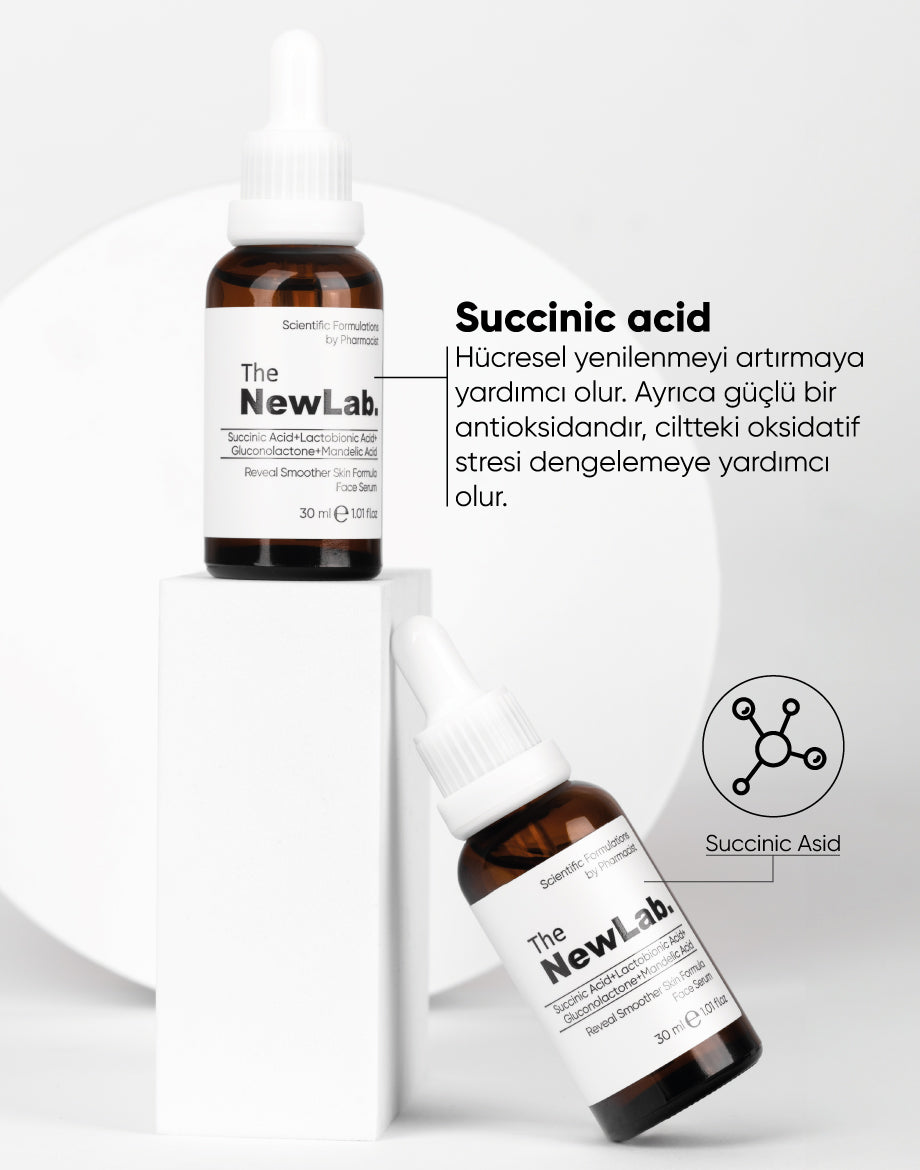 Anti-Acne Smoothing Face Serum – (Mandelic Acid + Succinic Acid + PHA Complex)Vendor:Anti-Acne Smoothing Face Serum – (Mandelic Acid + Succinic Acid + PHA Complex)The NewLab.
- Regular price
-
571.94TL - Regular price
-
879.90TL - Sale price
-
571.94TL
YENİQuick view
What is Mandelic Acid?
Mandelic acid is a gentle type of alpha hydroxy acid (AHA) derived from bitter almonds. Having the largest molecular structure within the AHA family, this acid penetrates the skin much more slowly than other acids—which minimizes the risk of irritation and ensures it can be safely used even on sensitive skin. With its antibacterial properties, gentle exfoliating effect, and ability to support collagen production, it offers a versatile solution against acne, blemishes, enlarged pores, and signs of aging.
While other AHAs like glycolic acid and lactic acid are water-soluble, mandelic acid’s oil-soluble structure allows it to reach deep into the pores. This unique property makes it an effective active ingredient for both exfoliation and acne treatment.
The NewLab Products Containing Mandelic Acid
The NewLab offers mandelic acid technology in various product forms to meet every skin need. The mandelic acid products in our peeling and serum ranges are formulated in effective concentrations.
Purifying and Renewing Enzyme Powder Peeling
Purifying and Renewing Enzyme Powder Peeling is an innovative formula that combines the power of mandelic acid, succinic acid, tartaric acid, and papain enzymes. Activated with water, this powder-form peeling gently clears away dead cells, excess oil, dirt, and makeup residue from the skin. Thanks to its structure containing no physical particles, the risk of irritation remains minimal even on sensitive skin. With its immediate peeling effect, it accelerates the skin's renewal cycle, providing a brighter and more vibrant appearance.
Anti-Acne Smoothing Face Serum
Anti-Acne Smoothing Face Serum, with its concentrated formula containing mandelic acid, has been specially developed for acne-prone and textured skin. Its formula, supported by salicylic acid and niacinamide, deeply cleanses pores while smoothing the skin surface and balancing sebum.
With regular use, it is noticed within 1-3 weeks that the skin looks smoother and brighter. In 4-8 weeks, a significant improvement is observed in pore appearance, acne scars, and skin tone irregularities.
What are the Benefits of Mandelic Acid for the Skin?
Gentle Exfoliation and Cell Renewal: It gently removes dead cells from the skin's surface, revealing the fresh, bright cells underneath. By accelerating the cell cycle, it contributes to a more youthful-looking skin.
Anti-Acne and Anti-Blemish Effect: Thanks to its strong antibacterial properties, it reduces acne-causing bacteria. By regulating sebum production, it prevents pores from clogging and prevents new acne formation. It has been shown to be effective in various types of acne, including cystic acne.
Blemish Removal and Tone Equalizing: It reduces the appearance of sun spots, post-acne marks, and age spots. By fighting hyperpigmentation, it helps in evening out skin tone.
Anti-Aging Support: It supports collagen production, reducing the appearance of fine lines and wrinkles. It contributes to the skin looking firmer, plumper, and more elastic.
Skin Barrier Support: Unlike other acids, it works without damaging the skin barrier. By preventing moisture loss, it supports the skin's protective structure.
Mandelic Acid vs. Glycolic Acid: Which One Should You Prefer?
Glycolic acid has the smallest molecule in the AHA family; therefore, it penetrates the skin rapidly and provides a strong peeling effect. However, this speed increases the risk of irritation, redness, and peeling, especially in sensitive skin. Mandelic acid has a molecule about twice the size of glycolic acid and is absorbed into the skin much more slowly. This makes it an ideal starter AHA for sensitive skin, rosacea-prone skin, and those using acids for the first time. Additionally, mandelic acid has antibacterial properties while glycolic acid does not—which gives mandelic acid an extra advantage in acne treatment.
Mandelic Acid vs. Salicylic Acid: What are the Differences?
Salicylic acid is a BHA (beta hydroxy acid) that works inside the pore and is highly effective against comedonal acne (blackheads, whiteheads). Although mandelic acid is an AHA, its oil-soluble structure allows it to penetrate pores similarly to BHAs. The main difference between the two actives: while salicylic acid specializes more in pore cleansing, mandelic acid works in a wider range including peeling, brightening, antibacterial effects, and anti-aging. The two can be used alternately on different days, or one can benefit from The NewLab’s combined formulations.
For Which Skin Type is it Suitable?
Thanks to its gentle structure, mandelic acid is a suitable active for almost all skin types:
- Sensitive skin: It carries a much lower risk of irritation compared to other AHAs. It is the ideal starter active for those new to acids.
- Oily and combination skin: It regulates sebum production, cleanses pores, and reduces acne formation.
- Acne-prone skin: Thanks to its antibacterial property, it prevents pimple formation and helps fade post-acne marks.
- Mature skin: It fights fine lines and wrinkles by supporting collagen production.
- Dull and lackluster skin: By removing dead cells, it restores the skin's natural glow.
- Normal and dry skin: It provides gentle exfoliation, improving skin texture. A moisturizer must be used afterward on dry skin.
How to Use Mandelic Acid?
Proper usage ensures you get maximum efficiency from mandelic acid products:
- Gently wash your skin with a suitable cleanser.
- Prepare the skin's pH balance by applying a toner.
- Apply 2-3 drops of mandelic acid serum onto clean, dry skin on the face and neck area with circular motions.
- Wait a few minutes for the serum to be absorbed.
- Apply your moisturizer.
- Always use sunscreen during daytime use — AHAs increase the skin's sensitivity to the sun.
For Enzyme Powder Peeling: Take a small amount into your palm, apply to pre-moistened face with circular motions, and rinse with plenty of water. It is recommended for use 2-3 times a week in the nighttime skincare routine.
Tip: Those using mandelic acid for the first time should start using it every other day during the first week to let the skin adjust to the acid. A slight tingling sensation for the first few days is normal and temporary. Those with an almond allergy must perform a patch test before use.
Best Combinations with Mandelic Acid
- Niacinamide: Provides a synergistic effect — niacinamide strengthens the skin barrier while mandelic acid offers gentle exfoliation. An excellent duo for evening out skin tone.
- Hyaluronic Acid: Prevents dryness that may occur after peeling, deeply moisturizes the skin, and supports the absorption of active ingredients.
- Alpha Arbutin: A powerful combination for blemish removal. While mandelic acid removes dead cells, alpha arbutin regulates melanin production.
- Vitamin C: Strengthens antioxidant protection and brightening effect. It is recommended to use them at different times (Vitamin C in the morning, mandelic acid in the evening).
Actives that should not be used together: It should not be used simultaneously with retinol — as both actives can sensitize the skin, the risk of irritation increases when used together. Alternating use on different days is preferred.
Things to Consider During Use
- Sun protection is essential: Mandelic acid increases the skin's sensitivity to the sun. Apply SPF 30 or higher protection during daytime use.
- Do not use simultaneously with retinol: Both are strong actives. Alternating use on different nights is safer.
- Do not use on damaged skin: Do not apply on peeled, cut, or overly sensitized skin.
- Almond allergy: Since it is derived from bitter almonds, those with an almond allergy should be careful and perform a patch test.
- Patch test: Apply a small amount behind the ear or under the jaw before the first use and wait 24-48 hours.
- Storage: Keep products in a cool, dry environment protected from light.
Frequently Asked Questions
What does mandelic acid do?
Mandelic acid gently exfoliates the skin, removing dead cells, clearing pores, reducing acne formation, evening out skin tone, and supporting collagen production. Thanks to its antibacterial properties, it also displays an anti-acne effect. It is the gentlest of all AHAs.
How long does it take for mandelic acid to show effect?
With regular use for 1-3 weeks, it is noticed that the skin looks smoother and brighter. Regular use for 4-8 weeks is recommended for significant improvement in the appearance of acne, pores, and blemishes.
Can mandelic acid be used on sensitive skin?
Yes, mandelic acid is the most suitable of all AHAs for sensitive skin. Because its large molecular structure penetrates the skin slowly, the risk of irritation is minimal. Nevertheless, it is recommended to start by using it every other day in the first week.
Can mandelic acid be used every day?
It depends on your skin's tolerance. Start by using it 2-3 times a week or every other day initially. After your skin gets used to it, you can transition to daily use. If you feel any irritation or excessive dryness, reduce the frequency of use.
What is the difference between mandelic acid and glycolic acid?
Both are types of AHAs, but glycolic acid has a much smaller molecule, so it penetrates the skin rapidly and shows a stronger peeling effect — which increases the risk of irritation. Thanks to its larger molecule, mandelic acid is gentler and also has antibacterial properties. Mandelic acid is a more suitable choice for sensitive and acne-prone skin.
Can mandelic acid be used together with retinol?
They should not be applied simultaneously. The risk of irritation, redness, and excessive dryness increases when both actives are used together. Alternating use on different nights (e.g., Mon-Wed-Fri mandelic acid, Tue-Thu retinol) is a safe method.
Does mandelic acid remove blemishes?
Yes, by accelerating cell turnover, it reduces the appearance of sun spots, acne marks, and age spots. For a stronger blemish-removing effect, combined use with alpha arbutin or Vitamin C is recommended.
Does mandelic acid tighten pores?
Yes, by clearing out oil and dirt inside the pores, it helps reduce the appearance of pores. With regular use, cleaner and tighter-looking pores are observed.
The NewLab Difference
At The NewLab, we produce our products containing mandelic acid at concentrations based on scientific research, with pH-balanced formulas. Our dermatologically tested, paraben-free formulations can be safely used on all skin types. With our authenticity guarantee and free shipping advantage, your products reach your door quickly.
If you want to clear your pores, fight acne, and achieve smoother skin, explore The NewLab's mandelic acid collection. For peeling, you can choose our Enzyme Powder Peeling, and as a daily serum, our Anti-Acne Smoothing Serum.